
A successful commercial flat roof installation project requires careful planning, quality materials, and a step by step approach that ensures long term performance. Commercial roofs are different from residential systems because they often cover larger areas, support mechanical equipment, and experience heavier environmental exposure throughout the year.
Property owners and business managers frequently focus on roofing materials while overlooking the installation process itself. However, even the highest quality materials may fail if installation procedures are not performed correctly. Understanding the installation process can help building owners make informed decisions and improve project outcomes.
Modern commercial properties depend heavily on roofing systems for structural protection, energy efficiency, and operational reliability. Learning how installation works helps create better expectations before construction begins.
Planning a Commercial Roofing Project
Before any installation work begins, contractors first evaluate the existing roof condition and structural requirements. Planning is necessary because every commercial building has different dimensions, usage requirements, and environmental conditions.
Professional teams usually inspect structural conditions, drainage systems, and existing roofing materials before moving forward.
The early planning stage also helps determine which commercial roofing systems fit the building requirements.
How Roof Assessments Improve Performance
Initial evaluations help identify potential issues before construction work begins.
Roof Surface Preparation
Preparation remains one of the most important stages of the flat roof installation process because the roof surface must support all future roofing layers.
Existing roofing materials may require removal while damaged surfaces often need repairs before installation begins.
| Installation Stage | Purpose | Benefit |
| Roof inspection | Evaluate conditions | Identify problems |
| Surface preparation | Create stable base | Better installation |
| Material application | Install roofing system | Long term protection |
| Final inspection | Verify quality | Improved reliability |
Poor preparation often creates future roofing problems even when high quality materials are used.
How Preparation Supports Roof Stability
Roof surfaces should remain clean, stable, and structurally sound before material installation begins.
Choosing Commercial Roofing Materials
Material selection affects durability, maintenance needs, and weather resistance. Different commercial roofing materials provide different advantages depending on building requirements.
Common roofing systems may include membrane materials, modified bitumen systems, and built up roofing solutions.
Building owners should evaluate material characteristics before making final decisions.
Important material considerations include:
- Building size and design
- Environmental conditions
- Long-term maintenance expectations
- Energy efficiency goals
Choosing appropriate materials early helps support better long-term performance.
How Material Selection Affects Roof Lifespan
Proper material choices improve structural reliability and reduce future repair concerns.
Flat Roof Construction Process
During flat roof construction, contractors install multiple layers that work together as a complete roofing system.
Roof systems typically include insulation materials, protective barriers, waterproofing layers, and membrane surfaces.
Although flat roofs appear level, slight slopes are usually incorporated to support water movement.
How Roofing Layers Improve Protection
Each roofing layer supports overall system durability and moisture resistance.
Flat Roof Membrane Installation
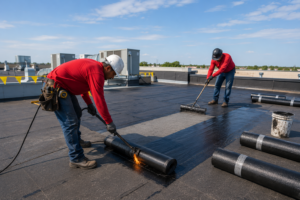
One of the most critical stages involves flat roof membrane installation because membrane systems help prevent water penetration.
Modern membrane systems create protective barriers designed to resist moisture exposure and environmental stress.
Installation quality becomes extremely important because poorly sealed seams may increase leak risks.
How Membranes Prevent Water Damage
Water resistant materials help improve roofing lifespan and reduce structural risks.
Commercial Roof Drainage Systems
Water management plays a major role in roofing durability. Proper flat roof drainage systems prevent standing water from damaging roofing materials.
Drainage systems may include internal drains, scuppers, and specialized slope designs.
Commercial properties require efficient water movement because larger roof areas collect significant amounts of rainfall.
How Drainage Improves Roof Performance
Effective drainage reduces moisture related concerns and improves long term durability.
Commercial Roof Installation Steps
Successful commercial roof installation steps involve organized workflows that reduce errors and improve construction quality.
Contractors generally perform installation activities according to detailed project plans and manufacturer recommendations.
Property owners can also benefit from educational resources related to Shingle Roofing, roofing materials for summer heat, and flat roofing contractors when researching broader roofing solutions.
Businesses often improve internal website navigation through content such as flat roof repair queens and Flat roofing in Queens.
How Organized Installation Improves Efficiency
Organized installation practices help improve consistency and project performance.
Commercial Roof Replacement Process
A commercial roof replacement often follows procedures similar to new installations. However replacement projects may require additional removal work and structural evaluation.
Older roofing systems sometimes contain hidden moisture damage or material deterioration that requires repair before new installation begins.
Common roofing concerns include:
- Moisture penetration problems
• Surface damage and deterioration
• Drainage issues
• Material wear over time
Early problem identification often helps reduce future repair costs.
How Replacement Improves Roof Reliability
Replacing aging roofing systems often improves performance and operational efficiency.
Conclusion
The commercial roofing process involves much more than placing materials on a roof surface. Successful commercial flat roof installation depends on planning, preparation, material selection, drainage performance, and proper installation methods.
Understanding each stage of the process helps building owners make informed decisions and improve long-term roofing performance.
Contact Royal Renovators Inc. today at (718) 414-6067 or visit us 118-35 Queens Blvd, Forest Hills, NY 11375 and discover reliable service you can trust.
Frequently Asked Questions About Commercial Flat Roof Installation
How long does a commercial flat roof installation take?
Project timelines depend on roof size, weather conditions, material selection, and overall project complexity.
What materials are commonly used for commercial roofing systems?
Common materials include TPO, EPDM, PVC membranes, modified bitumen systems, and built-up roofing materials.
Why are drainage systems important for flat roofs?
Drainage systems help prevent standing water and reduce moisture-related damage.
Can commercial roofing systems improve energy efficiency?
Yes. Many modern roofing systems include materials designed to improve insulation and reduce energy usage.
How often should commercial roofs be inspected?
Commercial roofs should typically be inspected at least twice a year and after major weather events.