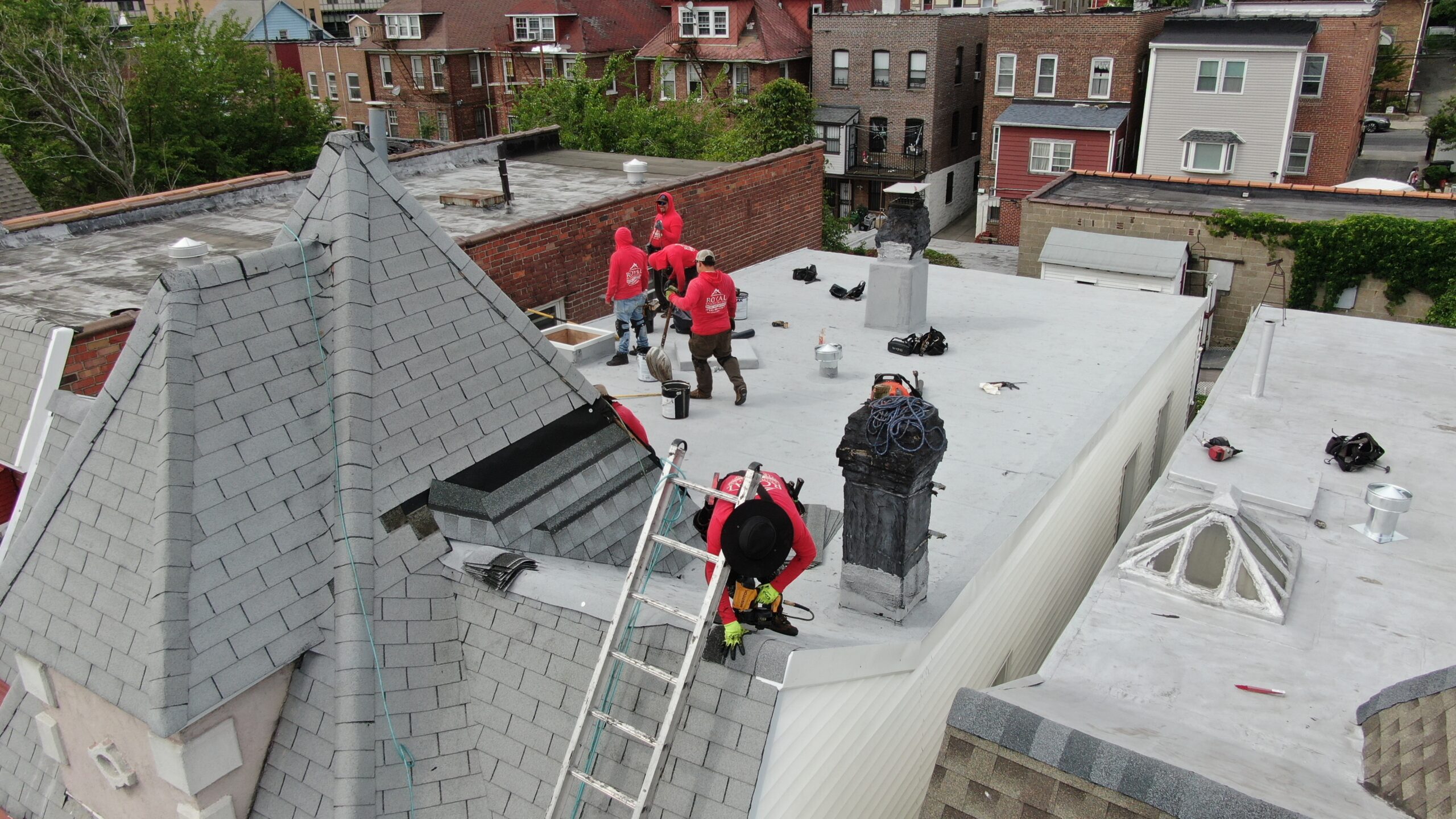
Snow and ice impact on flat roofs in Queens buildings is one of the most serious winter-related challenges property owners face. In Queens, where flat roofing systems are common across townhouses and multi-family buildings, winter weather can quietly damage your roof long before visible signs appear. Snow accumulation, combined with freezing temperatures, creates a cycle that puts stress on roofing materials and leads to long-term structural issues if not addressed early.
Unlike sloped roofs, flat roofs do not allow snow to slide off naturally. This means snow stays in place for longer periods, slowly melting and refreezing. Over time, this repeated process weakens the roofing system and increases the risk of leaks, drainage problems, and interior damage.
Why Snow & Ice Impact on Flat Roofs in Queens Buildings Should Not Be Ignored
The main reason snow and ice impact on flat roofs in Queens buildings becomes a problem is poor drainage caused by minimal slope. When snow melts during the day and refreezes at night, it forms layers of ice that block water flow. Once drainage is restricted, water begins to pool on the surface.
In many Queens buildings, especially older properties, drainage systems are not always in ideal condition. When drains are blocked by ice or debris, water has nowhere to go. This standing water gradually seeps into the roofing membrane, leading to leaks that may not be immediately noticeable inside the building.
Ice Formation and Drain Blockage
Ice formation often starts around drains, edges, and parapet walls. As melted snow refreezes, it creates solid ice barriers that trap water. This trapped water increases pressure on the roofing surface and forces moisture into weak points.
Structural Stress from Snow Load
Snow may seem light at first, but when it becomes wet and compacted, it adds significant weight. Over time, this weight can stress the roof structure. In extreme situations, excessive snow accumulation can cause sagging or compromise the structural integrity of the building.
Common Damage Caused by Snow & Ice on Flat Roofs
Roof Leaks and Interior Damage
One of the earliest signs of snow and ice impact on flat roofs in Queens buildings is water infiltration. When water cannot drain properly, it seeps into cracks and seams. This leads to ceiling stains, peeling paint, and even mold growth inside the property.
Membrane Wear and Cracking
Flat roofing materials such as EPDM and modified bitumen are designed for durability, but constant freezing and thawing accelerates wear. The membrane may crack, shrink, or separate at seams, making it easier for water to enter.
Damage to Flashing and Parapet Walls
Flashing and parapet walls are critical for protecting roof edges. Ice buildup around these areas can loosen materials and create gaps. Once these areas are compromised, the entire roofing system becomes vulnerable.
How to Reduce Snow & Ice Impact on Flat Roofs in Queens Buildings
Pre-Winter Roof Inspection
A professional inspection before winter is one of the best ways to prevent damage. Identifying small issues early helps avoid expensive repairs later. This step is essential for reducing snow and ice impact on flat roofs in Queens buildings.
Maintaining Proper Drainage Systems
Keeping drains clean ensures that melting snow can exit the roof efficiently. Even minor blockages can lead to water pooling and ice formation.
Improving Insulation
Proper insulation helps maintain a consistent temperature across the roof surface. This reduces uneven melting and minimizes the risk of ice buildup.
Safe Snow Removal
Removing excess snow after heavy storms can reduce structural stress. However, this should be done carefully to avoid damaging the roofing membrane.
Why Professional Roofing Services Are Essential in Queens
Managing snow and ice impact on flat roofs in Queens buildings requires more than basic maintenance. Professional roofing contractors understand local weather patterns and how they affect flat roofing systems. They can identify hidden issues and provide long-term solutions tailored to your building.
For safety guidelines and building standards, property owners can also refer to the NYC Department of Buildings, which provides valuable information on maintaining structural integrity.
Professional inspections not only address current issues but also help prevent future damage. This proactive approach saves time, money, and stress during the winter season.
Long-Term Protection Strategies for Flat Roofs
Upgrading Roofing Materials
Modern roofing systems are designed to handle extreme weather conditions more effectively. Upgrading your roof can improve durability and resistance to snow and ice damage.
Installing Tapered Insulation
Tapered insulation systems help direct water toward drains, reducing the chances of pooling and freezing.
Routine Maintenance Plans
Regular maintenance ensures that small problems are fixed before they become major issues. This is especially important in Queens, where winter weather can be unpredictable.
Conclusion
Understanding snow and ice impact on flat roofs in Queens buildings is essential for protecting your property during winter. From ice blockages to structural stress, the risks are significant but manageable with proper planning and maintenance. Regular inspections, proper drainage, and professional support can extend the life of your roof and prevent costly repairs.
If you want to protect your building from winter damage and ensure long-term performance, now is the time to act. Call (718) 414-6067 today to schedule a professional flat roof inspection in Queens and stay ahead of potential issues.
Snow & Ice Flat Roof FAQs for Queens Buildings
What causes flat roof damage during winter in Queens?
Common causes include snow accumulation, ice formation, water pooling, and repeated freeze thaw cycles that weaken roofing materials.
How do I know if snow has damaged my flat roof?
Signs include leaks, water stains, sagging areas, and visible cracks or damage on the roof surface.
Can snow and ice lead to flat roof leaks?
Yes, melting snow can pool on the roof and refreeze, allowing water to seep into cracks and seams, causing leaks.
How often should flat roofs be inspected during winter?
Flat roofs should be inspected before winter and after major snowstorms to identify and prevent potential damage.
Why is professional roof inspection important in winter?
Professional inspections help detect hidden damage, ensure proper drainage, and provide long-term solutions to prevent costly repairs.