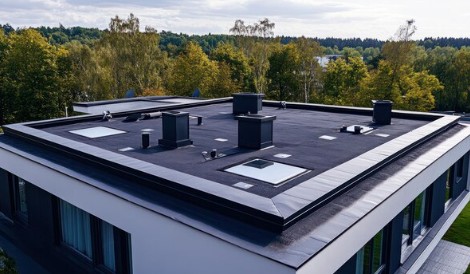
When people think about flat roof design, they often focus on materials, insulation, or appearance but one of the most critical components for long-term performance is often overlooked: drainage. Even the best roofing membrane or insulation system can fail prematurely if water doesn’t flow where it should. That’s why professional installation and regular maintenance by a skilled roofing crew are essential for ensuring that your flat roof drains properly and stands the test of time.
The Importance of Drainage in Flat Roofs
Despite the name, flat roofs aren’t truly flat they typically have a subtle slope (usually around 1-2%) that directs water toward drains or scuppers. This design helps prevent ponding water, which occurs when rainwater collects in shallow depressions on the roof’s surface and doesn’t drain away within 24 to 48 hours.
When water sits too long, it can lead to a chain reaction of costly problems:
- Premature membrane deterioration caused by standing water and UV exposure.
- Structural damage from added weight and moisture penetration.
- Mold and rot in the roof deck and insulation layers.
- Leaks and interior water damage, especially around seams or flashings.
Good drainage isn’t just a design detail it’s the foundation of a healthy, long-lasting flat roof system.
How Flat Roof Drainage Works
- Internal Drains
Found on many commercial buildings, internal drains are placed strategically in low points of the roof. Water flows into them and is carried through pipes that run inside the building and down to ground level.
- Advantages: Ideal for large roofs and areas where external downspouts are undesirable.
- Maintenance Tip: Regularly inspect for blockages or debris buildup, especially after storms.
- Scuppers
Scuppers are openings in the parapet walls that allow water to drain off the sides of the roof into downspouts or collector boxes.
- Advantages: Simple and effective for moderate rainfall.
- Maintenance Tip: Keep scuppers clear of leaves and debris to prevent overflow or backflow.
- Gutters and Downspouts
Some flat roofs use external gutter systems to direct water away from the structure.
- Advantages: Cost-effective and easy to access for cleaning.
- Maintenance Tip: Clean gutters seasonally to prevent clogging and ensure proper water flow.
Why Drainage Is Often Overlooked
In many cases, flat roof drainage is neglected because it’s not visible. Building owners and designers may prioritize aesthetics, materials, or insulation assuming that the roof’s slope alone will take care of water flow. Unfortunately, even a small installation error, like a misaligned drain or clogged outlet, can create persistent ponding issues that compromise the entire system.
Don’t let poor drainage compromise your roof’s integrity. Contact a trusted roofing crew today at 118-35 Queens Blvd Forest Hills, NY 11375 (718) 414-6067 https://www.nycrenovators.com for a professional inspection and drainage assessment and give your flat roof the protection it deserves before the next rainfall hits.