Storm wind damage roof repair Bronx property owners often start after high winds, heavy rain, sudden temperature shifts, or fast-moving storms hit the borough. Bronx apartment buildings and brick homes can look stable from the street, yet roof edges, flashing, membranes, shingles, parapets, and gutters may suffer damage that is not immediately visible.
Strong wind does more than tear off roofing materials. It can lift membrane seams, loosen flashing, shift rooftop equipment, open small roofline gaps, and push rain beneath weak areas. Once that happens, water may enter the building during the next storm.
Apartment buildings face added risk because many have flat roofs, rooftop equipment, drains, and larger roof surfaces. Brick homes can hide damage near chimneys, parapets, roof edges, and shingle transitions.
This guide helps identify early warning signs, not just obvious roof collapse. Fast inspection and timely roof repair can prevent leaks, tenant complaints, interior damage, and emergency service calls.
Why Storm Winds Cause Serious Roof Damage in Bronx Properties
A wind damaged roof Bronx property owners notice may begin with loose materials, roof edge movement, or sudden leaks after a storm. However, wind damage often starts before anything falls off the building.
Bronx neighborhoods have dense blocks, taller buildings, attached homes, and exposed rooflines. These conditions can intensify wind pressure around roof edges, corners, parapets, and rooftop equipment.
When roofing materials are already aging, wind can quickly expose weak points. A small seam separation, cracked flashing joint, or lifted shingle can become a leak path during the next heavy rain.
Strong Wind Gust Patterns in the Bronx
Strong wind gusts can move between buildings with added pressure. In dense urban areas, streets and building gaps can act like wind channels that push gusts toward roof edges and upper walls.
Flat and pitched roofs both face uplift pressure. Wind can pull at membranes, shingles, metal edge details, and flashing when it moves across the roof surface.
Corners and perimeters often take the most stress. These areas should receive close attention after any major wind event.
A professional roofing inspection helps identify whether wind has loosened materials before water enters the building.
Aging Roofing Systems in Bronx Apartment Buildings
Many Bronx apartment buildings have older roofing systems, previous patchwork, and materials that have already handled years of storms. Age makes roofs more vulnerable when wind pressure increases.
Older membranes may lose flexibility. Sealants may crack. Flashing may separate from walls. Past repairs may also fail when wind and rain arrive together.
Deferred maintenance increases risk because small problems stay hidden until severe weather exposes them. Once the roof opens, water can travel across insulation and ceilings.
For multifamily properties, early inspection protects more than the roof. It also helps prevent tenant disruption and interior damage.
Brick Homes and Wind Stress on Roofing Edges
Bronx brick homes often have chimneys, parapet walls, sloped roof sections, flat roof additions, or roofline masonry details. Wind can stress these areas even when the main roof surface looks intact.
Parapet walls and chimneys create natural transition points. If flashing around these areas separates, wind-driven rain can enter behind the roof covering.
Brick homes may also hide roofline leaks longer because water can travel behind masonry or plaster before showing indoors. As a result, the first warning sign may be a stain or odor inside.
A proper inspection should check both roof materials and nearby masonry connections.
How Wind Damage Affects Apartment Building Roofs Differently
Apartment building roof damage is often more complex than damage on a smaller home. Larger roof surfaces, rooftop equipment, access paths, drains, vents, and tenant spaces all increase the number of possible failure points.
Flat roofs are common on Bronx apartment buildings. When wind lifts the edge of a membrane or separates a seam, water can move beneath the surface and appear far from the entry point.
Because these buildings serve multiple residents, one leak can affect several units or common spaces. A quick visual check from the ground is not enough after a strong wind event.
Flat Roof Membrane Lifting and Separation
Flat roof membranes can lift when wind catches loose edges, weak seams, or poorly secured flashing. EPDM, TPO, and modified bitumen systems all need secure perimeters and well-maintained seams.
A small separation may settle back after the storm, which makes damage difficult to see. Still, the bond may be weakened and ready to leak during the next rain.
Seams are especially important. If wind pulls them apart slightly, moisture can enter beneath the membrane and spread across the roof deck.
Apartment buildings with flat roofing, EPDM, or TPO systems should receive post-storm inspections after strong gusts.
Rooftop Equipment Damage
Apartment buildings often have HVAC units, vents, skylights, hatches, satellite equipment, and service paths on the roof. Wind can shift loose equipment, panels, covers, or debris.
Even small movement can puncture membranes or weaken flashing around equipment curbs. A loose panel or metal piece can scrape the roof surface during a storm.
Maintenance access also matters. If workers step on storm-damaged areas after high winds, punctures and seam issues may worsen.
After severe weather, equipment bases, curbs, supports, and surrounding roof surfaces should be checked for movement and damage.
Drainage System Failure During Storms
Wind can push debris into drains, scuppers, and gutters. Once drainage slows, water may pond on the roof and place more stress on seams and flashing.
A blocked drain can turn wind damage into water damage. Even a strong roof system can leak when water remains trapped near weak areas.
Shifted drain covers, clogged scuppers, and loose gutter sections are common after storms. These issues should be handled before the next rainfall.
Routine gutters and drainage maintenance reduces the risk of ponding and overflow after wind events.
Storm Wind Damage Signs on Bronx Brick Home Roofs
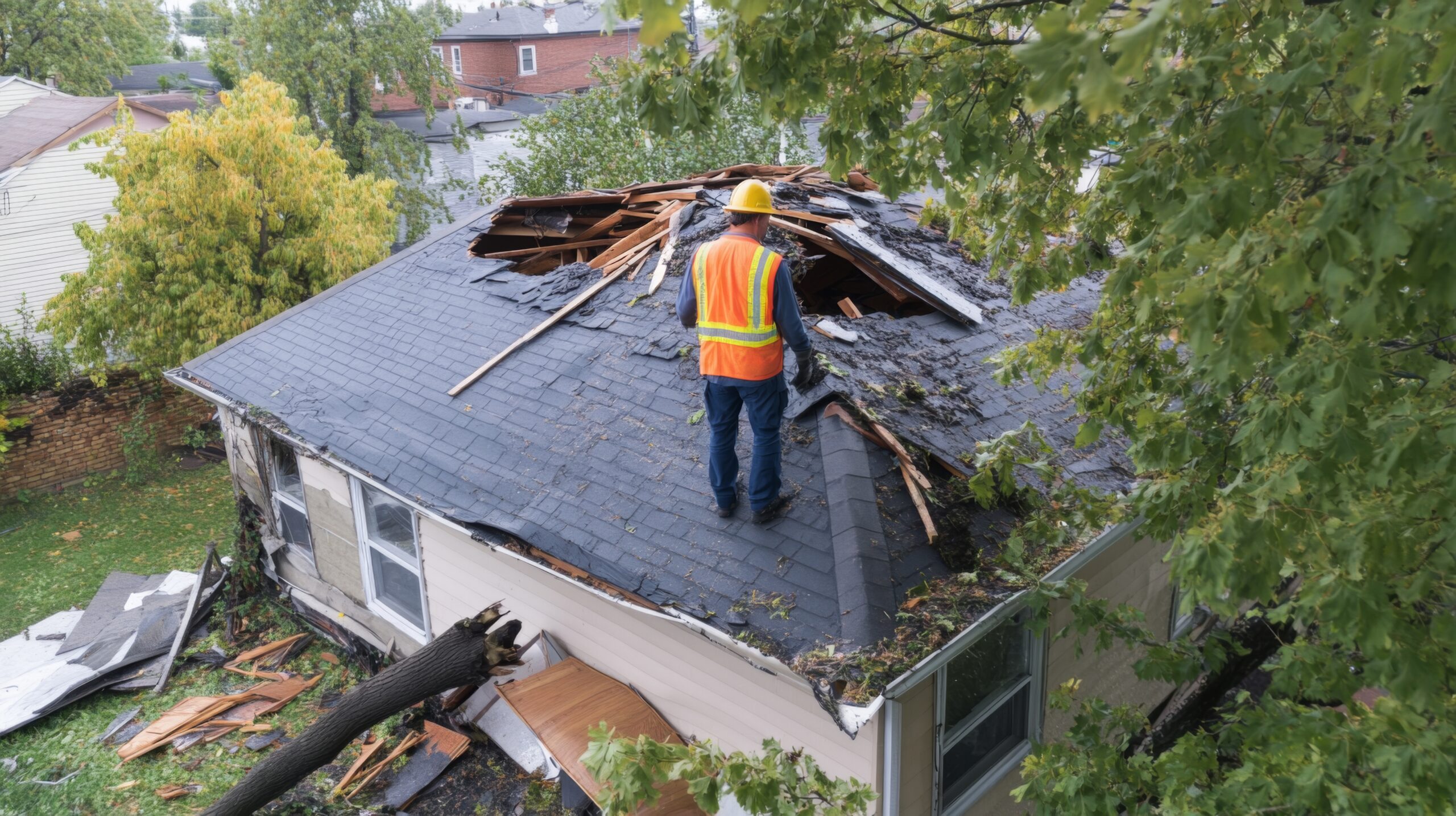
Bronx brick home roof repair often becomes necessary when wind affects shingles, flashing, chimneys, roof edges, or parapet details. Damage may look small at first, but it can quickly lead to leaks.
Brick homes may hide roof issues longer than lighter construction because moisture can travel behind masonry and interior finishes. By the time water stains appear, the roofline may have leaked more than once.
Homeowners should look for changes after storms, especially near chimneys, upper walls, roof edges, and attic areas.
Loose or Missing Shingles After High Winds
Loose or missing shingles are clear warning signs after high winds. Shingles may lift, crease, crack, or tear away from the roof surface.
Some damage is harder to see. A shingle can lift during a storm and settle back down, leaving the seal weakened. That area may leak later even if it looks normal from the street.
Older shingles face greater risk because they become brittle over time. Wind can break tabs, loosen fasteners, or expose underlayment.
Properties with shingle roofing should be inspected after major gusts, especially if debris or roofing granules appear around the property.
Flashing Separation Near Chimneys and Walls
Flashing protects roof transitions around chimneys, walls, skylights, and roof edges. Wind vibration can loosen metal flashing or separate old sealant.
Once flashing opens, rain can enter behind the roof surface. This is especially common near brick chimneys and masonry walls.
Metal fatigue may develop over time. Storms then expose the weakness by bending, lifting, or shifting the flashing.
A flashing issue should not be covered with quick surface sealant only. The connection needs proper repair so water cannot return.
Brick Parapet and Roofline Cracks
Brick parapets and roofline masonry can crack when storms stress the roof edge. Wind pressure, rain, freeze-thaw movement, and old mortar can all contribute.
Cracks near parapets matter because they can allow water to enter both the masonry and the roof system. This creates a combined roof and wall leak risk.
A roofline crack may also show that flashing has pulled away or that coping stones have shifted. These details need careful inspection.
For brick homes, the roof and masonry should be evaluated together after severe wind events.
Hidden Wind Damage Most Bronx Property Owners Miss
Storm wind damage roof repair Bronx buildings need is not always obvious. Some of the most serious problems are hidden under materials that appear to have settled back into place.
Wind can weaken bonds, break seals, and stress the roof deck without leaving dramatic surface damage. Because of this, leaks may appear days or weeks later.
Hidden damage is one reason professional post-storm inspections matter. A roof may look fine while the system has already lost protection.
Lifted Roofing Materials That Settle Back
Lifted materials can settle back after strong wind. This happens with shingles, membrane edges, flashing pieces, and even small roof patches.
From the street, the roof may appear unchanged. However, the seal may be broken, allowing water to enter during the next storm.
This type of damage often causes delayed leaks. Homeowners may not connect the leak to the earlier wind event.
A close roof inspection can identify creasing, loosened edges, open seams, and weak flashing that are not visible from below.
Underlayment and Decking Stress
Underlayment and decking can suffer when wind lifts the top roofing layer. Once the protective surface opens, moisture can reach materials below.
Water may soak into insulation, roof decking, or wood framing. Over time, this can create soft spots, odors, mold, and interior staining.
Decking stress may not appear right away. The roof surface can hide damage until water has already spread.
A contractor should check for moisture movement when leaks follow a wind event.
Interior Warning Signs
Interior warning signs often include ceiling stains, damp odors, bubbling paint, peeling plaster, or musty smells near upper floors. These signs may show after rain that follows a windstorm.
Top-floor apartments and upper rooms usually reveal leaks first. However, water can travel along beams or insulation before appearing indoors.
Odors from trapped moisture should not be ignored. They may point to damp insulation or hidden mold growth.
If interior signs appear after a storm, owners should schedule an inspection before the next rain.
When Storm Wind Damage Turns Into an Emergency Roof Repair
Emergency roof repair Bronx storms create becomes necessary when water is actively entering the building, roof materials are loose, or structural safety may be affected. Fast action helps limit damage.
Active leaks can spread into ceilings, walls, flooring, electrical areas, and tenant spaces. In apartment buildings, one roof opening can affect several units.
Structural safety risks also matter. Loose flashing, unstable rooftop equipment, lifted membrane sections, or cracked parapet details should be handled quickly.
Delays can complicate insurance claims. Photos, inspection reports, dates, and repair documentation help show what happened and when action was taken.
When storms cause active damage, emergency roof repair may control the issue first. Permanent storm damage roof repair should follow once conditions are safe.
Risks of Delaying Wind Damage Roof Repairs in the Bronx
Wind damage may look manageable at first, but delays often increase cost and risk. Small roof openings can allow repeated water intrusion after every rainfall.
Bronx apartment buildings and brick homes both need timely repair because hidden moisture can move through roof layers, walls, and ceilings. A small repair can become a broader restoration project when ignored.
Property owners should treat storm-related roof changes as early warnings. Waiting for a larger leak often makes the final repair more expensive.
Escalating Repair Costs
Minor repairs can turn into full replacements when water reaches insulation, decking, or structural materials. A small flashing repair costs less than widespread roof restoration.
Repeated patching also adds up. If the same area fails after every storm, the roof may need a more complete repair strategy.
Older buildings face higher risk because damage can spread through existing weak points. Water may enter past repair areas or aging seams.
A professional evaluation helps owners decide whether roof repair or roof replacement is the better long-term choice.
Code Compliance and Liability Issues
Apartment buildings carry tenant safety responsibilities. Loose roof materials, active leaks, and unstable roofline components can create liability concerns.
Bronx building inspections may also raise concerns if exterior conditions appear unsafe. Roof edges, parapets, and drainage issues should be addressed before they worsen.
Mixed-use or larger properties may require more planning because tenants, storefronts, sidewalks, and access areas can all be affected.
Working with a contractor experienced in commercial roofing helps owners manage larger building needs more effectively.
Insurance Claim Denials
Insurance claim issues can arise when storm damage is not documented quickly. Delayed inspections may make it harder to connect damage to a specific storm event.
Photos, inspection notes, repair reports, and weather timelines can help support a claim. Missing documentation may lead to disputes or reduced coverage.
Property owners should avoid waiting until leaks spread. Early inspection creates a clearer record of damage.
A qualified contractor can document roof conditions and recommend next steps.
Professional Inspection Process for Storm Wind Damage Roof Repair
Storm wind damage roof repair Bronx properties need should begin with a careful inspection. The goal is to find both visible and hidden storm effects before repairs begin.
| Inspection Area | What the Contractor Checks | Why It Matters |
| Roof edges | Lifted membrane, loose metal, damaged flashing | Wind pressure often hits perimeters first |
| Flat roof seams | Open seams, wrinkles, separation, weak patches | Small openings can let water spread below the surface |
| Shingle areas | Missing shingles, lifted tabs, creasing, granule loss | Wind can break seals without full shingle loss |
| Parapets and chimneys | Cracks, loose coping, flashing gaps, mortar damage | Roofline masonry can become a leak path |
| Drains and gutters | Blockages, shifted parts, overflow marks | Poor drainage worsens storm damage |
| Interior ceilings | Stains, dampness, odors, active leaks | Interior signs help trace hidden water paths |
Post-Storm Inspection Checklist
A post-storm inspection should cover the entire roof system, not only the area where damage appears. Roof edges, seams, drains, flashing, parapets, equipment curbs, and interior signs all matter.
The contractor should also ask about past leaks. Previous repair zones often become weak points during strong winds.
Photos and notes create a useful repair record. This helps owners understand what changed after the storm.
A complete inspection gives property owners better information before choosing repairs.
Moisture Scans and Documentation
Infrared moisture scans may help identify damp insulation or hidden moisture patterns in some roof systems. Moisture meters can also help confirm water movement.
Not every roof requires advanced testing, but larger apartment buildings often benefit from better documentation.
Inspection records can support maintenance planning and insurance discussions. They also help avoid unnecessary repairs.
Clear documentation protects owners from guessing and gives contractors a better repair plan.
Repair vs Replacement Evaluation
A repair may work when wind damage is localized and the surrounding roof remains sound. Examples include flashing correction, seam repair, shingle replacement, or membrane patching.
Replacement becomes more likely when damage is widespread, the roof is old, or leaks keep returning after storms. A failing roof may not respond well to repeated patches.
The evaluation should include roof age, material condition, drainage, previous repairs, and interior damage.
A practical recommendation should focus on long-term protection, not just the lowest immediate cost.
Preventive Steps to Reduce Future Wind Damage
Preventive care helps Bronx property owners reduce storm risk before damage occurs. Stronger materials, better fastening, clean drainage, and seasonal inspections all support better roof performance.
High winds test roof edges first. Therefore, edge securement, flashing quality, and membrane attachment deserve regular attention.
Reinforced Fastening Systems
Wind-rated materials and reinforced fastening systems can improve roof resistance. They help keep membranes, shingles, edge metal, and flashing in place during strong gusts.
Fastening details should match the roof type and building exposure. Apartment buildings may need stronger perimeter securement than smaller properties.
A contractor can identify weak attachment points during inspection.
Stronger fastening reduces the chance of uplift and storm-related openings.
Regular Roof Maintenance for Bronx Properties
Seasonal inspections help find problems before storm season. Spring and fall are useful times to review roof surfaces, flashing, gutters, drains, and parapets.
Drainage cleaning is also important. Blocked drains and gutters can turn wind damage into water damage.
After major storms, owners should schedule a quick review if they notice loose materials, stains, odors, or debris.
Routine maintenance supports longer roof life and fewer emergency calls.
Upgrading Vulnerable Roofing Components
Some roof components fail faster than the main system. Flashing, edge metal, seams, drains, and membrane transitions should receive special attention.
Upgrades may include stronger flashing, improved edge details, better drainage, new membrane sections, or reinforced seams.
Buildings with aging EPDM or TPO systems may need targeted repairs before storm season.
Replacing vulnerable components early can help prevent larger storm damage later.
Conclusion: Protecting Bronx Apartment Buildings and Brick Homes from Storm Wind Damage
Storm winds can cause both visible and hidden roof damage. Missing shingles, lifted membranes, loose flashing, cracked parapets, clogged drains, and interior stains all deserve attention after severe weather.
Bronx apartment buildings face higher risk because many have flat roofs, rooftop equipment, large roof surfaces, and tenant spaces below. Brick homes also need careful inspection because damage near chimneys, parapets, and rooflines may appear slowly.
Fast action helps reduce repair costs, interior damage, insurance complications, and emergency situations. A professional inspection can reveal wind damage before the next storm turns it into a major leak.
For expert guidance, contact Royal Roofing Bronx at 718-395-5061. Visit 1231 Lafayette Ave 2nd FL, Bronx, NY 10474 for roof inspections, wind damage evaluations, flat roof service, and repair planning.
FAQs: Storm Wind Damage Roof Repair in the Bronx
How do I know if my roof has wind damage after a Bronx storm?
Signs include missing shingles, lifted roof edges, loose flashing, membrane wrinkles, clogged drains, ceiling stains, damp odors, or debris on the roof. Some damage is hidden, so a professional inspection is recommended after strong winds.
Can wind damage occur without missing shingles?
Yes, wind damage can happen without missing shingles. Wind can break seals, lift materials that settle back, loosen flashing, open seams, and stress underlayment. Leaks may appear later during rain even if the roof looks normal from the street.
Are apartment building roofs more vulnerable to wind damage?
Apartment building roofs can be more vulnerable because they often have large flat surfaces, rooftop equipment, drains, seams, and edge details. Wind can lift membranes, shift equipment, block drainage, or stress flashing around penetrations.
How soon should I schedule emergency roof repair after a storm?
Schedule emergency roof repair immediately if water is actively entering the building, roof materials are loose, or safety risks exist. If damage is not active, schedule an inspection as soon as possible to prevent delayed leaks.
Does insurance cover storm wind damage roof repair in the Bronx?
Coverage depends on the policy, roof condition, cause of damage, deductible, and documentation. Property owners should take photos, keep inspection reports, and contact their insurance provider quickly after suspected storm wind damage.
What areas of brick homes are most affected by high winds?
High winds often affect roof edges, shingles, chimney flashing, parapet walls, coping stones, gutters, and roofline masonry. These areas should be inspected after storms because damage may not be visible from ground level.
Can small wind damage lead to full roof replacement?
Small wind damage can lead to replacement if it allows repeated leaks, damages decking, affects large roof areas, or exposes an already aging roof system. A professional inspection can determine whether repair or replacement makes more sense.