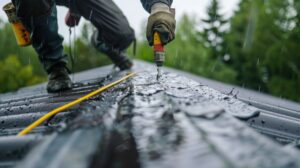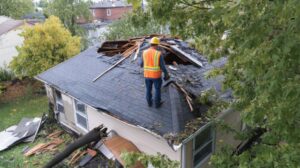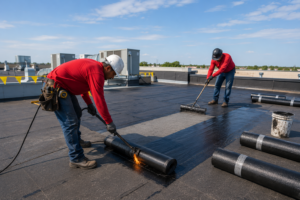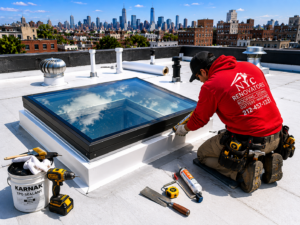
EPDM roofing Bronx apartment buildings use is common because many Bronx multifamily properties have low slope or flat roof systems that need durable, flexible, and cost practical protection. Apartment building flat roofs often cover large surface areas, support mechanical equipment, and deal with heavy seasonal exposure.
Bronx buildings include pre war apartments, mid rise multifamily properties, mixed use buildings, and older residential structures with roof systems that must handle snow, rain, foot traffic, drainage limits, and rooftop service access. EPDM is often chosen because it performs well on large flat roofing areas when installed and maintained correctly.
In simple terms, EPDM works best on low slope apartment roofs where drainage is controlled, foot traffic is limited, seams are properly installed, and routine inspections are part of the maintenance plan. It may not be the best fit for every building, especially where heavy rooftop activity, poor drainage, or high reflectivity needs are major concerns.
This guide focuses on material suitability, common risks, maintenance expectations, and decision making. It is not a sales pitch. The goal is to help Bronx apartment building owners and managers understand when EPDM makes sense and when another commercial roofing system may be a better fit.
Why Flat Roofs Are Common on Bronx Apartment Buildings
Apartment building flat roofs are common in the Bronx because they make practical use of limited urban space. Many multifamily buildings were designed with flat or low slope roof systems that support access, equipment, drainage, and building operations.
Multifamily roofing Bronx properties need is different from single family roofing. Apartment buildings often have larger roof areas, more penetrations, more tenants affected by leaks, and more rooftop equipment to consider.
A flat roof can be efficient, but it must be maintained carefully. Drainage, membrane condition, roof edges, flashing, and rooftop access all affect performance.
Bronx Building Design and Urban Density
Bronx apartment buildings often include pre war structures, mid rise properties, attached buildings, and mixed use layouts. Flat roofs became common because they fit dense city construction and allow better use of building footprints.
Urban density also affects roof access. Narrow streets, nearby buildings, and limited staging areas can make roof work more complex than it looks from the ground.
Many apartment buildings also need space for vents, HVAC equipment, hatches, and utility access. A flat roof allows these systems to be placed above living areas without taking up valuable interior or ground level space.
This practical design is one reason roofing decisions on Bronx apartment buildings need to consider function, not just material cost.
Functional Benefits of Flat Roof Systems
Flat roofs are easier to access for inspections, repairs, drainage checks, and mechanical servicing. This is useful for apartment buildings where ongoing maintenance is part of property management.
They also allow HVAC units, vents, and other rooftop systems to be placed in one accessible area. For multifamily buildings, this can simplify service coordination.
Cost is another reason flat roof systems remain common. Large roof areas can often be covered more efficiently with membrane systems than with steep slope assemblies.
For building owners, the benefit is practical. A well maintained flat roof supports tenant comfort, protects interior spaces, and keeps maintenance access manageable.
Challenges Flat Roofs Face in the Bronx Climate
Bronx flat roofs face snow load, freeze thaw cycles, heavy rain, summer heat, and strong storm exposure. These conditions test seams, flashing, drains, and roof edges.
Ponding water is one of the biggest concerns. If water remains on the roof too long, it can stress the membrane and increase leak risk.
Freeze thaw movement can also affect flashing, sealants, and seams. Water that enters small openings can expand during freezing weather and make damage worse.
Apartment building owners should treat flat roof maintenance as a seasonal responsibility, not only an emergency response.
What Is EPDM Roofing and Why It’s Popular in the Bronx
EPDM roofing Bronx apartment buildings use a synthetic rubber membrane designed for low slope and flat roof systems. It has been used for decades on commercial and multifamily properties because it is flexible, durable, and practical for large roof surfaces.
As a flat roof membrane Bronx owners often consider, EPDM is valued for cold weather flexibility and repairability. It can perform well when seams, flashing, drainage, and roof edges are properly handled.
EPDM is not automatically the right choice for every roof. Its performance depends on building use, drainage, installation quality, membrane thickness, and maintenance habits.
EPDM Material Composition Explained
EPDM stands for ethylene propylene diene monomer. It is a rubber roofing membrane commonly used on low slope roofs.
The material is flexible, which helps it expand and contract through seasonal temperature changes. This flexibility is useful in the Bronx, where roofs experience hot summers and cold winters.
EPDM is available in different thickness options, commonly including 45 mil, 60 mil, and 90 mil. Thicker membranes can offer greater puncture resistance and durability, but the right choice depends on roof use and budget.
For apartment buildings, membrane thickness should be selected based on rooftop traffic, equipment, drainage, and long term maintenance expectations.
EPDM Installation Methods for Apartment Buildings
EPDM can be installed in different ways. Fully adhered systems use adhesive to bond the membrane to the roof substrate. These systems can offer a clean appearance and strong overall attachment when installed correctly.
Mechanically fastened systems use plates and fasteners to secure the membrane. They can be efficient for larger roof areas, but the attachment pattern and detailing matter.
Ballasted roofs use stone or pavers to hold the membrane in place. This method may be suitable in certain conditions, but it is not ideal for every apartment building because structural load and drainage must be considered.
A professional assessment should determine which installation method fits the building structure, roof deck, access, and long term maintenance plan.
Why EPDM Is Widely Used on Bronx Multifamily Properties
EPDM is widely used because it has a proven track record on large low slope roofs. Building owners often consider it when they need a practical membrane system for a broad roof area.
It can be cost efficient compared with some other systems, especially on larger apartment buildings. Its flexibility in cold weather is also useful in Bronx winters.
EPDM is also repairable when damage is localized. Seam issues, punctures, and flashing problems can often be addressed if the surrounding membrane is still in good condition.
For many multifamily buildings, EPDM offers a balance of durability, function, and maintenance practicality.
When EPDM Roofing Works Best for Bronx Apartment Buildings
EPDM roofing Bronx apartment buildings need works best when the roof conditions match the material’s strengths. It is especially practical for large, low slope roof areas with limited foot traffic and a clear drainage plan.
Multifamily roofing Bronx owners choose should be based on building use, tenant impact, roof access, drainage, and maintenance capacity. EPDM performs well when those factors are properly managed.
The best results come from correct installation and consistent upkeep. EPDM should not be treated as a set and forget roofing system.
Low Slope and Large Surface Area Roofs
EPDM is well suited for low slope roofs because it comes in large sheets that can cover broad areas with fewer seams. Fewer seams can reduce potential leak points when the installation is done correctly.
Apartment buildings often have wide roof surfaces that benefit from this efficiency. The membrane can be laid across large areas without the complexity of many small sections.
Roofs with fewer penetrations are also good candidates. The fewer vents, curbs, pipes, and equipment bases a roof has, the easier it is to detail the membrane properly.
For large low slope buildings, EPDM can provide practical, long term performance when drainage is not neglected.
Buildings with Limited Foot Traffic
EPDM works best when rooftop foot traffic is controlled. Apartment buildings often need maintenance access for HVAC units, vents, hatches, and utility equipment, but heavy foot traffic can increase puncture risk.
Service workers may carry tools, panels, parts, or equipment across the roof. Without walk pads or clear access paths, the membrane can be damaged.
Buildings with limited and managed rooftop access are better candidates for EPDM. Walkways can also be added in service areas to reduce wear.
Long term performance depends on how the roof is used after installation, not only how it is installed.
Owners Seeking Long Term Value Over Visual Appeal
EPDM is usually selected for function rather than appearance. On many apartment buildings, the roof is not visible from the street, so performance matters more than visual style.
For owners focused on lifecycle cost, EPDM can be a strong option. It may provide long term value when routine inspections and timely repairs are included in the maintenance plan.
The material can handle seasonal movement and large roof coverage efficiently. That makes it attractive for practical multifamily properties.
A building owner should still compare EPDM with other systems before deciding. The best roof is the one that fits the building’s real use.
Retrofit and Overlay Scenarios
EPDM may be used in retrofit or overlay situations when the existing roof is suitable. This depends on roof condition, trapped moisture, deck stability, insulation, drainage, and local requirements.
An overlay should never hide wet insulation or damaged decking. Covering existing problems can lead to premature failure and more expensive repairs later.
When appropriate, EPDM can help avoid a full tear off and reduce disruption for tenants. This may be helpful on occupied apartment buildings.
A professional roof replacement evaluation should confirm whether an overlay is acceptable or whether full removal is safer.
Common EPDM Roofing Issues Bronx Apartment Owners Should Watch For
EPDM roof repair Bronx property owners often begin with seam issues, drainage problems, punctures, flashing stress, or shrinkage on older roofs. These problems can develop slowly before tenants notice leaks.
Apartment building flat roofs require routine attention because small membrane problems can affect many units. A leak in one area may travel under insulation or decking before showing indoors.
EPDM is durable, but it still needs inspections. Weather, rooftop equipment, foot traffic, and aging adhesives all affect performance.
Seam Separation and Adhesive Failure
Seam separation is one of the most common EPDM issues. Seams can weaken when adhesives age, installation quality is poor, or water repeatedly sits near seam areas.
A small seam opening may not leak during light rain, but it can allow water under the membrane during storms. Once water enters, it may travel before appearing inside.
Installation quality plays a major role. Proper cleaning, adhesive application, seam rolling, and detailing help prevent early seam problems.
Regular inspection helps catch seam separation before it becomes a larger roof repair issue.
Ponding Water and Drainage Problems
Ponding water can shorten the life of any flat roof system. On EPDM roofs, standing water may stress seams, increase dirt buildup, and expose weak areas over time.
Drainage problems often come from structural slope issues, clogged drains, blocked scuppers, or poorly maintained gutters. Apartment buildings need a clear plan for keeping drainage paths open.
Scupper and drain maintenance should be part of seasonal roof care. Water should not remain on the roof long after rainfall ends.
If ponding is frequent, the building may need drainage improvements instead of repeated patching.
Punctures from Foot Traffic and Equipment
EPDM can be punctured by sharp tools, dropped equipment, screws, debris, or repeated rooftop traffic. Apartment buildings with frequent HVAC service are especially exposed.
Service paths should be protected with walk pads where needed. Maintenance workers should avoid dragging equipment across the membrane.
Debris should also be removed regularly. Loose metal, broken parts, branches, and construction materials can damage the membrane during wind or foot traffic.
Punctures are often repairable, but they should be fixed quickly before water reaches insulation or decking.
Shrinkage on Older EPDM Roofs
Older EPDM roofs may shrink over time. Shrinkage can create stress at roof perimeters, corners, penetrations, and flashing areas.
Perimeter stress can pull flashing away from walls or edges. Once flashing opens, water can enter during storms.
Shrinkage is more common on aging roofs and roofs that were not installed correctly. It should be inspected carefully when leaks appear near edges.
If shrinkage is widespread, localized repair may not be enough. The building may need a broader replacement plan.
EPDM vs Other Flat Roof Membranes for Bronx Multifamily Buildings
Flat roof membrane Bronx owners choose should depend on building use, drainage, foot traffic, budget, energy goals, and maintenance expectations. Multifamily roofing Bronx properties need practical decisions, not one size fits all answers.
| Roofing System | Best Fit | What to Watch For |
| EPDM | Large low slope roofs with controlled foot traffic | Seam aging, punctures, shrinkage, dark surface heat |
| TPO | Roofs needing stronger reflectivity and heat management | Seam quality, punctures, installation detail |
| Modified Bitumen | Roofs needing layered durability and familiar repair methods | Installation heat, seams, added weight, maintenance needs |
| Coated Existing Roof | Select roofs with stable surface and dry substrate | Surface preparation, coating limits, hidden moisture |
| Full Replacement System | Aging roofs with widespread failure or trapped moisture | Higher upfront cost but stronger long term reset |
EPDM vs TPO for Bronx Apartment Buildings
EPDM and TPO are both common flat roof membrane options. EPDM is known for flexibility and long use history. TPO is often chosen for reflectivity and heat reduction.
Durability depends on installation quality, membrane thickness, roof use, and maintenance. Neither system performs well if seams, flashing, and drainage are ignored.
Heat reflectivity can be a major difference. Standard black EPDM absorbs more heat, while white TPO reflects more sunlight. Some buildings may need that reflectivity.
For many Bronx apartments, the right choice depends on whether flexibility, cost, heat management, or building use is the top priority.
EPDM vs Modified Bitumen
Modified bitumen is a layered roofing system often used on flat and low slope roofs. It can be durable, but installation may involve heat, adhesives, or multiple layers depending on the system.
EPDM is a single ply membrane, which can be efficient for large roof areas. It also remains flexible in cold weather.
Repair flexibility depends on the type and condition of the roof. EPDM punctures and seam issues can often be repaired, while modified bitumen repairs may involve patches, coatings, or more involved surface preparation.
The choice should be based on roof condition, tenant impact, access, drainage, and long term maintenance goals.
Choosing the Right System Based on Building Use
Building use matters. An occupied apartment building needs a roofing system that can be installed and maintained with minimal disruption. A vacant building may allow more extensive work.
Rooftop use also matters. Buildings with heavy HVAC traffic, frequent service access, or rooftop equipment may need stronger walkway planning and puncture protection.
Budget and lifespan should be reviewed together. A cheaper installation may not be the better value if it creates frequent repair needs.
A professional evaluation should compare current roof condition, drainage, code requirements, energy goals, and future maintenance expectations.
Maintenance and Repair Expectations for EPDM Roofs in the Bronx
EPDM roof repair Bronx apartment owners plan for should be part of regular building maintenance. EPDM roofing Bronx apartment buildings can last longer when inspections are consistent and small problems are repaired early.
Bronx roofs face seasonal stress from snow, ice, rain, heat, wind, and debris. A roof that is ignored for years is more likely to need premature replacement.
Maintenance should be documented so owners and managers know what was inspected, repaired, and recommended.
Routine Inspection Schedules for Apartment Buildings
Apartment building EPDM roofs should usually be inspected at least twice a year, often in spring and fall. Additional checks are helpful after major storms, heavy snow, or reported leaks.
Inspections should review seams, flashing, drains, scuppers, gutters, punctures, edges, and rooftop equipment areas. Interior leak history should also be considered.
Post storm checks are important because wind can shift debris, loosen flashing, or expose weak seams.
Routine inspections help prevent small issues from turning into tenant complaints and emergency calls.
Typical EPDM Repairs and Their Lifespan Impact
Typical EPDM repairs may include seam resealing, patching punctures, correcting flashing issues, securing edges, and improving drainage.
When done early, these repairs can extend roof life and reduce leak risk. Waiting too long can allow water into insulation or decking, making repairs more expensive.
Patch repairs should be done with compatible materials and proper preparation. Poor patches may fail quickly and create repeat leaks.
If repairs become frequent across the roof, replacement planning may be more practical.
Maintenance Costs vs Premature Replacement
Routine maintenance costs are usually easier to manage than premature replacement. Scheduled inspections and small repairs help owners budget more predictably.
Emergency calls can be more disruptive, especially when leaks affect tenants. Emergency roof repair may stop active water entry, but it should not replace long term roof planning.
Storm related issues should also be documented. If a roof is damaged during severe weather, storm damage roof repair may be needed.
A maintenance plan helps owners decide when repair is still sensible and when replacement is the smarter investment.
When EPDM Is Not the Best Choice for Bronx Apartment Buildings
Apartment building flat roofs are not all the same. EPDM may not be the best choice when rooftop foot traffic is heavy, drainage is poor, or the building needs strong reflectivity for heat management.
Roofs with frequent maintenance traffic, tenant access, or heavy equipment may require added protection or another system. EPDM can be punctured if rooftop activity is not controlled.
Buildings with poor drainage should correct slope and water flow before choosing any membrane. No roofing material performs well when water sits for long periods.
In some situations, TPO or another membrane may outperform EPDM because of reflectivity, seam preferences, or rooftop use. The best decision should come from a building specific inspection.
Conclusion: Is EPDM the Right Roofing Choice for Your Bronx Apartment Building?
EPDM roofing Bronx apartment buildings can be a proven, cost effective solution for many multifamily properties. It works especially well on low slope roofs with controlled foot traffic, proper drainage, strong seams, and routine maintenance.
It is not the right answer for every building. Heavy rooftop use, poor drainage, heat reflectivity needs, and widespread existing damage can change the recommendation. A roof should be evaluated based on real conditions, not assumptions.
Regular inspections and timely repairs are critical for EPDM longevity. Seam issues, punctures, drainage problems, and flashing stress should be addressed before they create tenant leaks or emergency calls.
For a professional evaluation, contact Royal Roofing Bronx at 718-395-5061. Visit 1231 Lafayette Ave 2nd FL, Bronx, NY 10474 for flat roof inspections, EPDM roof repair, and multifamily roofing support.
FAQs: EPDM Roofing for Bronx Apartment Buildings
Is EPDM roofing suitable for all Bronx apartment buildings?
EPDM is suitable for many Bronx apartment buildings, especially large low slope roofs with controlled foot traffic and good drainage. It may not be ideal for roofs with heavy rooftop use, poor drainage, or strong reflectivity needs. A professional inspection should confirm fit.
How long does EPDM roofing last on multifamily buildings?
EPDM roofing can last for many years on multifamily buildings when installed correctly and maintained regularly. Lifespan depends on membrane thickness, seam quality, drainage, rooftop traffic, weather exposure, and how quickly small repairs are handled.
What are the most common EPDM roof problems in the Bronx?
Common EPDM roof problems include seam separation, adhesive failure, punctures, ponding water, flashing issues, membrane shrinkage, and drainage problems. Bronx weather can make these issues worse if inspections and repairs are delayed.
Is EPDM better than TPO for apartment building flat roofs?
EPDM is not automatically better than TPO. EPDM offers flexibility and a long performance history, while TPO often provides stronger reflectivity. The better choice depends on roof use, budget, drainage, energy goals, and maintenance expectations.
How often should EPDM roofs be inspected in the Bronx climate?
EPDM roofs on Bronx apartment buildings should usually be inspected at least twice a year, often in spring and fall. Additional inspections are recommended after storms, heavy snow, leaks, rooftop equipment work, or visible drainage issues.
Can EPDM roofs be repaired instead of replaced?
Yes, EPDM roofs can often be repaired when damage is localized. Seam resealing, puncture patches, flashing repairs, and drainage corrections may extend roof life. Replacement becomes more likely when damage is widespread or leaks keep returning.
What factors affect the cost of EPDM roofing for apartment buildings?
Cost depends on roof size, access, membrane thickness, insulation needs, drainage condition, installation method, existing roof removal, flashing complexity, and repair or replacement scope. A detailed inspection is needed for an accurate estimate.