Roof leak repair Bronx apartment buildings need is often more complex than a simple patch on a roof surface. Bronx roof leaks can start at seams, drains, flashing, rooftop equipment, parapet walls, or aging membranes, then travel across insulation and ceilings before tenants notice water inside.
Apartment buildings and multifamily homes create added challenges because one leak can affect several units, hallways, electrical areas, tenant belongings, and shared building systems. Dense construction, older roof assemblies, and limited roof access can also make leak tracing harder.
Many Bronx apartment buildings rely on flat roofing or low slope roof systems. These roofs can perform well when maintained, but ponding water, freeze thaw cycles, clogged drains, and rooftop foot traffic can create leak risks over time.
This guide focuses on diagnosis, repair strategies, and prevention. It does not treat roof leaks as surface problems only. A lasting repair starts with finding how water entered, how far it traveled, and which roofing details need correction.
Why Roof Leaks Are So Common in Bronx Apartment Buildings
Bronx roof leaks are common because many apartment buildings have aging roof systems, large flat roof areas, and heavy exposure to storms, snow, rain, heat, and rooftop equipment. Water intrusion Bronx buildings experience often begins with small defects that grow through repeated weather cycles.
Unlike single family homes, apartment buildings usually have larger roof surfaces with more drains, seams, vents, hatches, skylights, and mechanical penetrations. Each detail needs proper waterproofing.
When building owners delay inspections, small leak sources can become larger repair problems. Over time, water can move into insulation, decking, ceilings, walls, and tenant spaces.
Aging Roof Systems in Older Bronx Properties
Many Bronx apartment buildings have older roof systems with past repair layers, worn membranes, aged flashing, or outdated installation methods. Even when the roof looks stable, hidden weaknesses may exist around seams, drains, and roof edges.
Roof age affects performance. Materials become brittle, sealants dry out, and old patches may separate during heavy rain or temperature changes.
Legacy roof systems can also include materials that no longer match modern repair methods. This makes professional inspection important before choosing a repair approach.
A qualified roofing contractor can evaluate whether the existing roof can still be repaired or whether the building needs broader restoration planning.
Flat and Low Slope Roof Designs
Flat and low slope roofs dominate many multifamily buildings because they make practical use of urban space. They allow access for maintenance, equipment, vents, and utilities.
However, flat roofs depend heavily on drainage. If water sits too long, it can stress membranes, seams, flashing, and the roof deck below.
Ponding water is one of the most common flat roof problems. Even shallow standing water can speed up membrane wear and create leak risks near weak details.
Regular roof inspection and drainage checks help reduce leak problems before water reaches tenant spaces.
Weather Exposure and Urban Stress Factors
Bronx buildings face heavy rain, snow loads, wind, freeze thaw cycles, summer heat, and urban debris. These conditions affect roof membranes, flashing, drains, and rooftop equipment.
Freeze thaw movement can open small gaps around flashing and seams. During winter, water that enters those gaps can freeze, expand, and worsen the opening.
Rooftop equipment also creates stress. HVAC units, vents, pipes, access paths, and service traffic can damage membranes if the roof lacks proper protection.
Storms add another layer of risk. After high winds or heavy rainfall, owners should check for loose flashing, clogged drains, punctures, and active leaks.
Understanding Water Intrusion in Bronx Multi-Family Buildings
Water intrusion Bronx buildings experience rarely follows a straight path. A leak may begin at a roof drain, seam, penetration, or parapet, then travel beneath the surface before appearing in a top floor apartment or hallway.
This makes leak diagnosis difficult. The visible ceiling stain may not sit directly below the roof opening. Water can move across decking, through insulation, along beams, or behind interior finishes.
Because apartment buildings house multiple tenants, fast diagnosis matters. A leak can spread through more than one unit if water enters shared cavities or common areas.
How Water Travels Far from the Actual Leak Source
Water can move through capillary action, roof insulation, seams, structural joints, and ceiling cavities. It may travel several feet before dripping into an apartment.
Insulation saturation creates another problem. Wet insulation can hold water and release it slowly, which makes leaks appear even after rain has stopped.
Interior leaks often do not align with roof damage. A tenant may report water in one room, while the real source sits near a drain, vent, or parapet farther away.
Professional leak tracing helps avoid guessing. Moisture testing and roof mapping can point to the true source.
Common Entry Points for Water Intrusion
Common entry points include roof seams, flashing failures, drains, scuppers, skylights, vents, HVAC curbs, roof hatches, parapet walls, and membrane punctures.
Flashing failures cause many leaks because flashing protects transitions. When flashing separates or cracks, water can enter during heavy rain.
Drains and scuppers also need attention. If they clog, water can back up and move under seams, around drain bowls, or near roof edges.
Buildings with EPDM or TPO roofs should have seams and flashing inspected regularly because small openings can allow water beneath the membrane.
Why Delayed Repairs Worsen Structural Damage
Delayed repairs increase the risk of mold growth, ceiling collapse, damaged plaster, electrical concerns, and tenant complaints. Moisture can also weaken roof decking and framing over time.
A small leak can become expensive when water spreads beyond the first damaged area. Interior finishes may need replacement even after the roof gets repaired.
Electrical systems create an added concern in apartment buildings. Water near fixtures, wiring, or panels requires careful attention and fast response.
Prompt roof repair helps protect both the building structure and the people living inside it.
Warning Signs of Roof Leaks in Apartment and Multi-Family Buildings in Bronx
Bronx roof leaks often show up indoors before owners see anything wrong on the roof. Tenants may report stains, odors, bubbling paint, or damp spots after rain.
Exterior signs may appear during inspections. Blistered membranes, open seams, clogged drains, soft roof areas, and shrinkage can point to leak risk.
A building owner should treat repeated complaints from upper units seriously. Even small stains can reveal a larger water intrusion issue.
Interior Indicators Tenants Report First
Tenants often notice ceiling stains, bubbling paint, damp plaster, musty odors, or dripping water before the building owner sees roof damage.
These signs may appear after storms, snow melt, or long periods of rain. Sometimes they appear days later because water travels slowly through the roof assembly.
Cosmetic repairs do not solve the source. Painting over a stain without roof inspection allows moisture to return.
Property managers should document tenant reports, dates, weather conditions, and locations. This information helps the contractor trace the leak.
Exterior Roofing Red Flags
Exterior red flags include blistered membranes, open seams, loose flashing, punctures, cracked sealant, ponding water, clogged drains, and membrane shrinkage.
Blisters can show trapped moisture or air beneath the roof surface. Open seams can allow water to enter during storms.
Membrane shrinkage often creates stress around roof edges and penetrations. Once the perimeter pulls, flashing may fail.
Regular inspections catch these signs before tenants experience leaks inside.
Top Floor Leak Patterns in Bronx Buildings
Top floor units are most vulnerable because they sit closest to the roof. Water usually reaches these apartments before lower floors.
Seasonal patterns can also reveal the problem. Winter leaks may relate to ice, snow melt, and freeze thaw movement. Summer leaks may come from heavy storms and clogged drains.
Leaks near windows or exterior walls may involve rooflines, parapets, or masonry. Not every top floor leak starts in the center of the roof.
A complete inspection should check the roof surface, drainage, walls, and interior leak locations together.
Top Floor Leak Repair Challenges in Bronx Apartment Buildings
Top floor leak repair Bronx properties require can involve roof movement, rooftop equipment, drainage issues, tenant coordination, and hidden moisture. These factors make repairs more detailed than basic patchwork.
The challenge is finding the real path of water. A stain near an exterior wall may start at flashing, a parapet, a seam, or an equipment curb.
Strong repairs begin with diagnosis. When contractors patch only the visible spot, leaks often return during the next storm.
Heat Expansion and Roof Deck Movement
Roof decks expand and contract as temperatures change. This movement can stress seams, flashing, and repairs.
Summer heat can soften materials and increase movement. Winter colds can make some materials contract and become less flexible.
Over time, repeated movement can create small openings. These openings may leak only during certain weather conditions.
A repair should allow for movement rather than simply covering the surface. Otherwise, the same area may fail again.
Rooftop Equipment and Foot Traffic Damage
Bronx apartment buildings often have HVAC units, vents, satellite dishes, access hatches, and service paths on the roof. These features increase leak risk.
Maintenance workers may accidentally puncture membranes with tools, parts, or sharp equipment. Heavy foot traffic can also wear down roof surfaces.
Equipment curbs and penetrations need strong flashing. When these details age or separate, water can enter around them.
Walk pads, clear access paths, and routine checks help reduce damage from rooftop activity.
Temporary Repairs vs Long Term Solutions
Temporary repairs may stop active leaks during rain or storms. They can protect tenants and interiors until a full inspection can happen.
However, patchwork often fails when it does not address the source. A leak caused by drainage, flashing, or saturated insulation needs more than surface sealing.
Long term solutions may include seam reinforcement, flashing replacement, drain correction, membrane repair, or sectional restoration.
A professional assessment helps owners decide whether a repair is temporary, targeted, or part of a larger roof plan.
Common Roof Systems Used in Bronx Multi-Family Buildings
Multifamily roof repair Bronx buildings need depends on the roof system. Different materials leak in different ways, and repair strategies must match the system.
Bronx properties may have membrane roofs, modified bitumen, asphalt shingles on smaller mixed use buildings, or older layered systems. Some buildings also have both flat and sloped roof sections.
Knowing the system helps the contractor choose the right repair materials and methods.
Flat Roofing Systems: EPDM, TPO, and Modified Bitumen
Flat roof systems are common on Bronx apartment buildings. EPDM, TPO, and modified bitumen each have different leak behaviors.
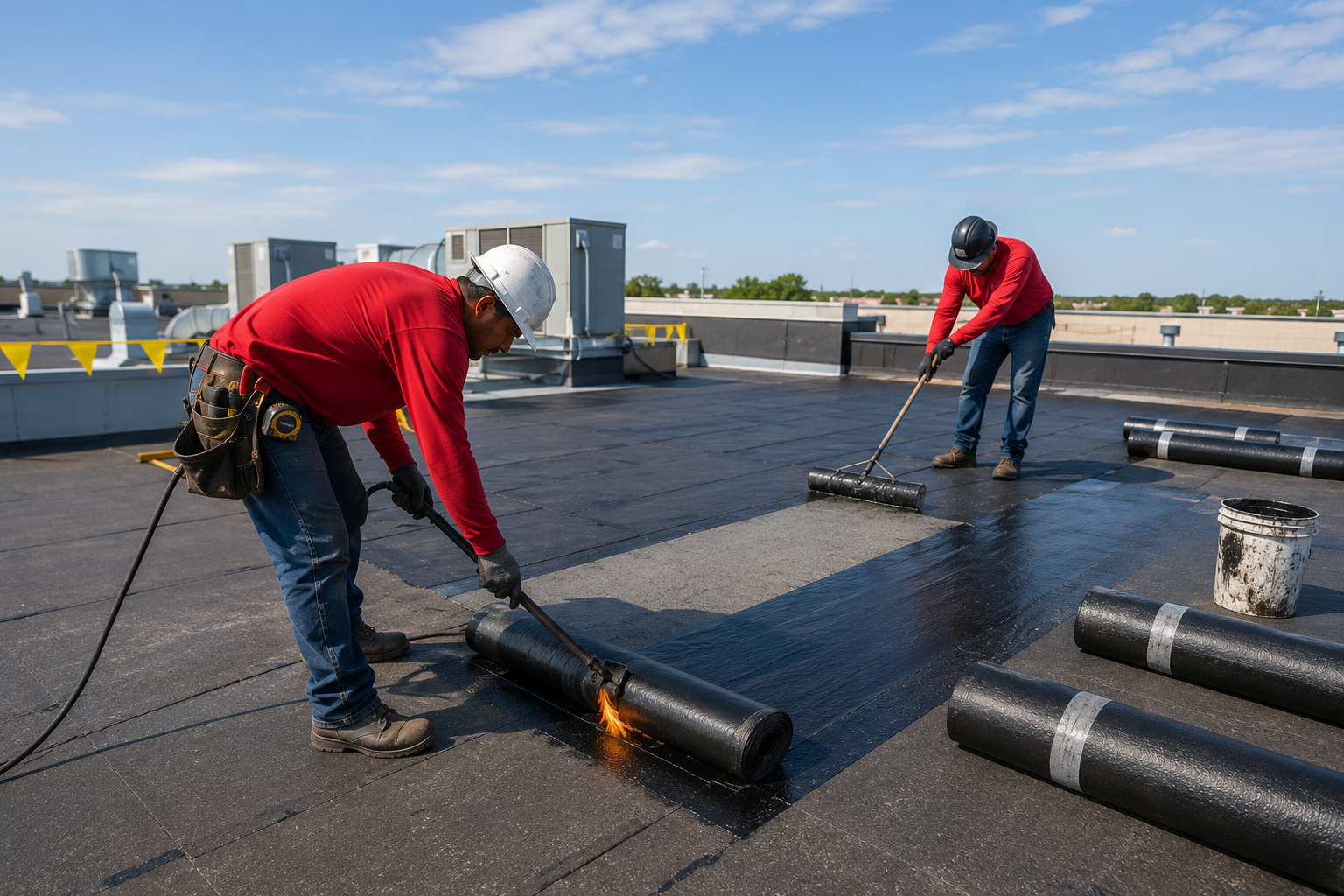
EPDM can develop seam problems, punctures, shrinkage, or flashing stress. TPO may experience seam failure, punctures, or damage around penetrations. Modified bitumen can crack, blister, or separate at laps.
Each system needs compatible repair materials. Using the wrong patch or sealant can lead to early failure.
A contractor experienced in flat roofing should identify the system before starting repairs.
Shingle and Sloped Roofs on Mixed-Use Buildings
Some mixed-use Bronx buildings have sloped roof sections, mansard areas, or smaller shingle roofs. These systems leak differently than flat membranes.
Shingle leaks often start with missing shingles, lifted tabs, flashing failure, or valleys that collect water. Wind can also drive rain under damaged shingles.
Buildings with shingle roofing should have flashing checked around dormers, walls, chimneys, and roof edges.
Although sloped roofs shed water faster, they still need routine inspection and timely repair.
Roof Drainage Systems and Their Role in Leaks
Roof drainage systems play a major role in leak prevention. Drains, scuppers, gutters, and downspouts must move water away from the roof surface.
Clogged drains can cause ponding water. Poor slope can leave water sitting near seams, penetrations, and flashing.
Improper drainage may turn a small defect into a recurring leak. Water that sits too long finds weak points.
Routine gutters and drain cleaning should be part of every apartment building roof maintenance plan.
Roof Leak Repair Process for Bronx Apartment Buildings
Roof leak repair Bronx apartment buildings need to follow a careful process. Guessing wastes money and often leads to repeat leaks.
A professional repair plan starts with inspection, leak tracing, moisture testing, and documentation. Then the contractor chooses targeted repair, sectional restoration, emergency service, or replacement planning.
| Repair Stage | What Happens | Why It Matters |
| Leak report review | Tenant complaints, stain locations, and weather timing are documented | Helps connect interior symptoms to roof conditions |
| Roof inspection | Seams, drains, flashing, penetrations, and membranes are checked | Identifies visible and likely leak sources |
| Moisture testing | Wet insulation or hidden saturation may be located | Prevents covering trapped moisture |
| Targeted repair | Damaged seams, flashing, or punctures are corrected | Solves localized leaks when the roof is still sound |
| Sectional restoration | Larger worn areas receive broader repair | Helps when damage affects more than one detail |
| Emergency response | Active water entry receives immediate control | Reduces tenant damage and safety risks |
Comprehensive Roof Inspection and Leak Tracing
A comprehensive inspection starts with the roof surface and continues into the building where damage appears. The contractor should review tenant reports, ceiling stains, roof conditions, and drainage paths.
Infrared scans can help identify moisture patterns in some roof systems. Moisture testing may reveal wet insulation or trapped water below the surface.
Leak tracing should include seams, flashing, drains, scuppers, skylights, vents, hatches, parapets, and equipment curbs.
Accurate diagnosis reduces unnecessary repairs. It also helps building owners understand what caused the leak.
Targeted Repairs vs Sectional Restoration
Targeted repairs work when the leak source is clear and the surrounding roof remains in good condition. Examples include seam reinforcement, puncture patches, flashing repair, and drain bowl correction.
Sectional restoration may be better when a larger roof area has wear, saturated insulation, repeated leaks, or multiple weak points.
Flashing replacement often matters because many leaks start at transitions rather than the main roof field.
A contractor should explain whether the repair solves one leak or improves a larger roof section. This helps owners plan budgets clearly.
When Emergency Roof Repairs Are Necessary
Emergency roof repair becomes necessary when water actively enters apartments, hallways, electrical areas, or commercial spaces. Loose roof materials and storm damage can also require urgent attention.
Temporary measures may include leak control, tarping, sealing, drainage clearing, or stabilizing damaged areas. These actions protect interiors until full repairs can happen.
After severe weather, storm damage roof repair may be needed if wind, debris, or heavy rain opened new leak paths.
Emergency work should lead to a follow up inspection. Without that step, the same leak may return.
Preventing Future Roof Leaks in Bronx Multi-Family Properties
Water intrusion Bronx buildings face can often be reduced with regular maintenance. Prevention works best when owners inspect roofs before problems reach tenants.
A maintenance program should include drainage cleaning, roof surface checks, flashing review, seam inspection, and documentation of previous repairs.
Good maintenance also helps owners decide when repair still makes sense and when replacement planning should begin.
Scheduled Roof Maintenance Programs
Apartment buildings should schedule roof inspections at least twice a year, often in spring and fall. Extra inspections help after major storms, heavy snow, or repeated leak reports.
A maintenance program should check membranes, seams, flashing, drains, gutters, penetrations, roof edges, and rooftop equipment areas.
Inspection records help property managers track changes over time. They also support smarter budgeting.
Regular roof care reduces tenant complaints and helps prevent emergency leak situations.
Drainage Management and Preventive Cleaning
Drainage management is essential for flat and low slope roofs. Water must leave the roof quickly to reduce stress on seams and flashing.
Seasonal cleaning should remove leaves, debris, sediment, and trash from drains, scuppers, gutters, and downspouts.
If ponding continues after cleaning, slope or drain design may need review. Repeated standing water should not be ignored.
Better drainage often reduces leak frequency and extends roof life.
Cost Comparison: Preventive Care vs Emergency Repairs
| Approach | Typical Work | Long Term Impact |
| Preventive inspection | Routine roof, flashing, drain, and seam checks | Finds problems before tenants report leaks |
| Seasonal cleaning | Clearing drains, scuppers, and gutters | Reduces ponding water and overflow |
| Planned repair | Fixing seams, flashing, punctures, and weak details early | Controls cost and limits interior damage |
| Emergency repair | Stopping active leaks during or after damage | Higher disruption and urgent scheduling |
| Deferred maintenance | Waiting until leaks spread | Greater risk of structural damage and replacement |
When Roof Repair Is No Longer Enough in Bronx
Multifamily roof repair Bronx owners schedule may not be enough when leaks keep returning. Recurring leaks often show that the roof system has broader failure, not just one damaged spot.
Structural deck deterioration is another concern. If water has softened decking, saturated insulation, or damaged multiple roof sections, small patches may not protect the building.
Replacement becomes more cost effective when repair costs keep rising and tenant complaints continue. A planned replacement allows owners to address drainage, insulation, flashing, and membrane performance together.
Buildings with widespread roof aging may need a full roof replacement evaluation before the next major storm season.
Conclusion: Long-Term Roof Leak Solutions for Bronx Apartment Buildings
Roof leaks in Bronx apartment buildings require professional diagnosis, not surface level fixes. Water intrusion can travel far from the original entry point, which makes accurate leak tracing essential.
Tenant complaints, ceiling stains, top floor leaks, and recurring dampness should never be ignored. These symptoms may point to roof seams, flashing, drains, membranes, parapets, or hidden moisture inside the roof system.
Proactive maintenance helps prevent tenant disruption, interior damage, mold growth, and costly emergency repairs. Timely service also protects building value and long term safety.
For trusted local help, contact Royal Roofing Bronx at 718-395-5061. Visit 1231 Lafayette Ave 2nd FL, Bronx, NY 10474 for leak inspections, multifamily roof repair, flat roof service, and expert guidance.
FAQs: Roof Leak Repair for Bronx Apartment Buildings
What causes frequent roof leaks in Bronx apartment buildings?
Frequent leaks often come from aging flat roofs, open seams, damaged flashing, clogged drains, ponding water, rooftop equipment, and storm damage. Older Bronx buildings may also have past patchwork or outdated materials that need professional inspection.
How do I know if a roof leak is coming from the roof or exterior walls?
A professional inspection can trace the source by checking roof seams, flashing, parapets, drains, masonry, and interior stain patterns. Water can travel behind walls or under roof layers, so the visible leak location may not match the entry point.
Why do top-floor apartments experience leaks more often?
Top-floor apartments sit directly below the roof, so they usually show leaks first. Water may enter through roof seams, drains, flashing, vents, skylights, or parapets, then appear as ceiling stains, damp walls, or peeling paint.
Can roof leaks spread to multiple units in a multi-family building?
Yes, roof leaks can spread to multiple units when water travels through insulation, ceiling cavities, shared walls, or structural openings. A leak that starts in one roof area may affect apartments, hallways, or common spaces nearby.
How quickly should roof leaks be repaired in apartment buildings?
Roof leaks should be inspected and repaired as soon as possible, especially when water is active. Delays can lead to mold, ceiling damage, electrical concerns, tenant complaints, and more expensive structural repairs.
Are flat roofs more prone to leaks in Bronx properties?
Flat roofs can be more prone to leaks when drainage is poor, seams open, membranes age, or ponding water remains after storms. With proper maintenance, inspections, and timely repairs, flat roofs can still perform well.
Can regular roof inspections prevent major water intrusion issues?
Regular inspections can reduce major water intrusion by finding seam problems, flashing gaps, clogged drains, punctures, and weak roof areas early. Preventive maintenance is usually less disruptive than emergency repairs after leaks spread.