Emergency Roof Repair Far Rockaway planning should begin before hurricane warnings appear because homes near the Atlantic Ocean face serious seasonal roofing risks. Far Rockaway properties are exposed to coastal wind, heavy rainfall, storm surge, salt moisture, flying debris, drainage overload, and sudden pressure changes that can place heavy stress on roofing systems.
This guide focuses on pre-storm roof readiness, not only repairs after damage happens. The goal is to help homeowners, landlords, property managers, and business owners strengthen roofs before hurricane season creates costly emergencies. A proactive approach can reduce roof leaks, interior water damage, mold concerns, and sudden repair costs.
NYC Renovators Far Rockaway helps property owners with hurricane roof inspections, emergency roof repair, roof repair, flat roofing, shingle roofing, roof replacement, storm damage repair, gutters, siding, masonry, waterproofing, and coastal exterior maintenance. In Far Rockaway, roof preparation should always consider the full exterior system because wind and water rarely affect the roof alone.
Why Hurricane Season Is Especially Dangerous for Far Rockaway Roofs
Far Rockaway roofs face unique hurricane season pressure because coastal storms bring several threats at once. Heavy rainfall can overwhelm drainage systems, ocean winds can lift roofing materials, and storm surge can push moisture into vulnerable exterior areas. When these forces happen together, small roof weaknesses can quickly turn into major leaks.
Coastal roof protection in Far Rockaway should begin before the first major storm of the season. Waiting until a hurricane watch is announced leaves little time to schedule inspections, fix loose materials, clean drains, or reinforce flashing. A roof needs preparation while conditions are calm, safe, and manageable.
Homes near Rockaway Beach and Arverne may experience stronger direct wind exposure because open coastal areas provide fewer natural barriers. Edgemere properties may face uneven wind pressure and drainage challenges, while Bayswater homes may deal with bay-side moisture and slow drying after heavy weather. Each area needs hurricane preparation based on its exposure.
The roof areas most likely to suffer during hurricanes include roof edges, gutters, vents, shingles, skylights, chimneys, pipe boots, flat roof seams, scuppers, drains, and flashing. These components should be checked before storm season begins.
Coastal Storm Surge and Heavy Rainfall
Storm surge can push ocean water inland while heavy rainfall falls from above. This combination increases the risk of water intrusion around roof edges, gutters, attic spaces, siding joints, masonry transitions, and exterior wall connections. During a hurricane, water does not always enter from the most obvious place.
Water backup can push moisture beneath shingles, behind flashing, or through weak roof seams. On flat roofs, ponding water can stress the membrane and allow moisture to reach insulation or decking. On pitched roofs, overflowing gutters can send water behind fascia and siding.
This is why drainage preparation is one of the most important hurricane roof steps. A clean and working drainage system helps reduce pressure on the roof before the storm arrives.
Extreme Wind Uplift in Oceanfront Neighborhoods
Oceanfront neighborhoods can experience strong wind uplift during hurricanes. Wind can move across open beach areas, between buildings, and over roof edges with significant force. This pressure is especially strong at roof perimeters, corners, ridges, valleys, and flat roof edges.
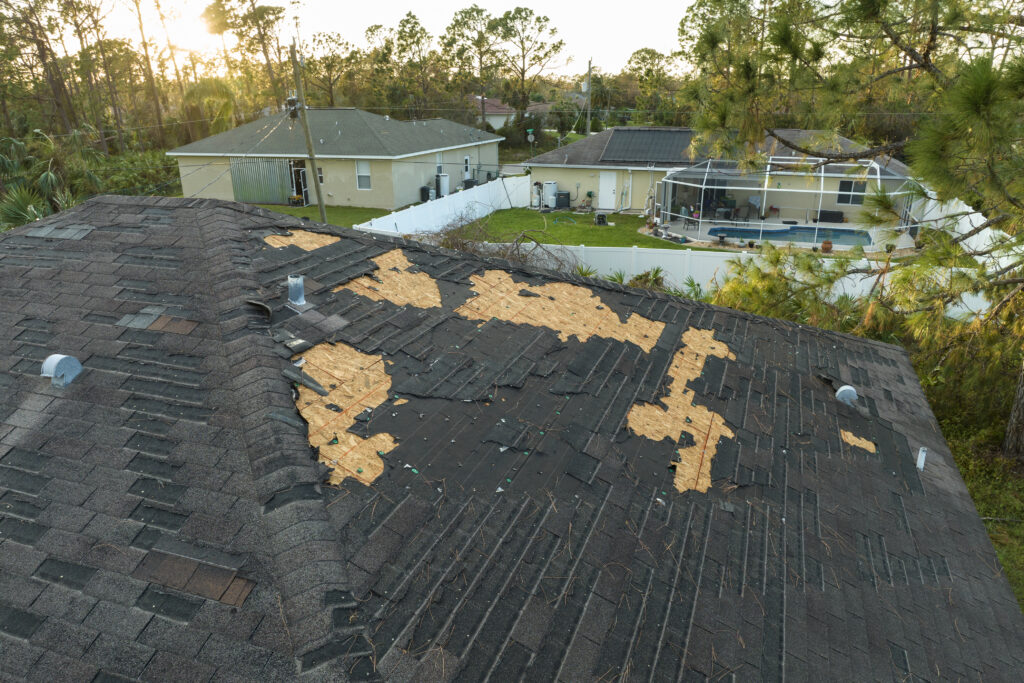
Shingles and membranes often fail first because wind gets underneath loose materials. Once one section lifts, the surrounding roof becomes more vulnerable. A few lifted shingles can expose underlayment, while a loose flat roof edge can allow wind to peel the membrane farther back.
This is why storm-ready roofing should include secure fastening, strong edge protection, sealed penetrations, and inspection of older repair areas. A roof that is already loose in small spots is much more vulnerable during hurricane conditions.
Flying Debris and Pressure Changes
Flying debris can damage shingles, flashing, skylights, vents, gutters, siding, and flat roof membranes. Even small debris can puncture flat roofing materials or loosen roof accessories. Wind-driven branches, loose outdoor items, and storm debris can all create impact points.
Hurricanes can also create pressure changes inside and outside the home. If wind enters through broken windows, attic vents, soffit gaps, or open exterior areas, pressure can push upward on the roof from below. This pressure imbalance can make existing roof weaknesses worse.
A pre-season roof check helps reduce these risks by identifying loose materials, exposed openings, damaged vent covers, weak flashing, and other details that can worsen during high wind.
How Hurricanes Cause Roof Damage in Coastal Far Rockaway,NYC
Hurricanes damage roofs in ways that ordinary storms often do not. A regular storm may bring heavy rain for a short time, but hurricanes can bring repeated gusts, wind-driven rain, pressure shifts, debris impact, and drainage stress for hours. That repeated force can expose every weak point in the roof system.
Hurricane roof preparation in NYC should focus on the full roof assembly, not only the surface material. Shingles, underlayment, fasteners, flashing, gutters, drains, roof edges, vents, skylights, attic ventilation, decking, siding, and masonry transitions all play a role in storm performance.
Far Rockaway homes need special attention because coastal exposure can weaken components before hurricane season begins. Salt air and moisture may already have affected fasteners, flashing, sealants, and gutters. When hurricane winds arrive, those weakened areas are more likely to fail.
Shingle Lift, Tear-Off, and Nail Failure
High winds can lift shingle tabs and allow air to get underneath them. Once wind enters, the shingle can bend, crack, tear, or pull away from the roof deck. A shingle that remains attached may still be damaged if its seal has been broken.
Nail failure can happen when fasteners are loose, misplaced, corroded, or installed into weak decking. If nails pull through the shingles, the roof surface loses holding strength. This can start with one area and spread across the slope during repeated gusts.
Progressive roof failure can begin with one lifted section. As wind continues, surrounding shingles can loosen, leaving underlayment exposed to rain. If the underlayment is also worn or torn, water can reach the decking and attic areas.
Shingle roofing in Far Rockaway should be checked before hurricane season for lifted edges, brittle tabs, missing granules, exposed nails, and weak flashing. These signs may not seem urgent in calm weather, but they can become serious during hurricanes.
Flat Roof Ponding and Membrane Stress
Flat roofs face a different hurricane risk. Instead of shingle tear-off, they often deal with ponding water, membrane lifting, seam stress, and drain backup. These problems are common on low-slope sections, additions, multifamily buildings, storefronts, and commercial properties.
EPDM, TPO, modified bitumen, and other flat roof systems can perform well during storms, but only when drains, seams, flashing, and perimeter edges are secure. The roof surface must be able to move water away and resist wind uplift.
A flat roof that already has ponding water, open seams, soft spots, or loose edges should be repaired before hurricane season. Waiting until active storm season increases the risk of emergency roof repair.
Flashing, Vent, and Edge Damage
Flashing, vents, skylights, chimneys, pipe boots, wall transitions, and roof edges are common hurricane failure points. These areas connect different parts of the roof, which makes them vulnerable to movement and water entry.
A pre-season roof check should focus heavily on these details. Small repairs before a hurricane can prevent expensive damage later.
Early Warning Signs Your Roof Is Not Hurricane-Ready in Far Rockaway
A roof may not be hurricane-ready even if it looks acceptable from the street. Many warning signs are small and easy to ignore, especially before storm season begins. Loose materials, minor leaks, soft spots, poor drainage, and aging components can all become serious during a hurricane.
Homeowners may only think about emergency roof repair in Far Rockaway after damage happens, but the better approach is to identify risk before the storm. The roof should be checked for weak points that wind and rain can exploit. A hurricane does not need a large opening to create damage. It can turn small roof movement into a serious leak.
Older roofs near the coast need extra attention because salt air, humidity, sun exposure, and previous storms may have already reduced performance. A roof that handled past storms may not be strong enough for the next one if its materials have weakened over time.
Warning signs that a Far Rockaway roof may not be hurricane-ready include:
- Loose, lifted, curled, or missing shingles on pitched roof areas
- Open seams, wrinkles, punctures, or loose edges on flat roof sections
- Rusted flashing, cracked sealants, damaged vents, or loose pipe boots
- Clogged gutters, blocked scuppers, sagging downspouts, or ponding water
- Ceiling stains, attic dampness, soft spots, or repeated minor leaks
Loose or Missing Shingles and Roofing Materials
Loose shingles, missing shingles, curled edges, and lifted tabs are clear signs that the roof needs attention before hurricane season. These materials can be torn off quickly during high winds.
Any visible material weakness should be repaired before storm season becomes active. Delaying repair can turn a manageable issue into emergency roof damage.
Soft Spots, Leaks, and Interior Ceiling Stains
Soft spots may indicate moisture below the roof surface. If decking, insulation, or underlayment is already damp, hurricane rain can make the damage worse. A roof with hidden moisture is less prepared to handle prolonged storm exposure.
Interior ceiling stains are another warning sign. Even small stains may point to roof leaks around flashing, vents, skylights, roof edges, or flat roof seams. These stains should not be painted over without checking the roof source.
A roof inspection can determine whether the issue is isolated or whether moisture has reached deeper layers. This helps homeowners decide whether minor repair or more serious work is needed before hurricane season.
Aging Roof Systems Near the Coast
Older roofs often fail first during hurricanes because materials lose flexibility and holding strength over time. Near the coast, this aging can happen faster due to salt, humidity, wind, and sun exposure.
Aging signs include granule loss, cracked sealants, rusted flashing, loose gutters, brittle shingles, and repeated repairs. These issues should be reviewed before hurricane season because they reduce the roof’s ability to resist wind and water.
Flat roofs may show aging through open seams, surface cracks, blistering, ponding water, or membrane shrinkage. Shingle roofs may show curling, exposed nails, missing granules, or worn valleys.
Storm-Ready Roofing Preparations for Far Rockaway Homes
Storm-ready roofing preparation is about strengthening weak points before hurricane conditions arrive. Far Rockaway homeowners should focus on roof securement, sealing, drainage, material condition, and exterior details that may allow water inside.
Coastal roof protection in Far Rockaway requires more than checking the visible roof surface. Roof edges, gutters, fasteners, flashing, vents, attic ventilation, siding transitions, masonry details, and drainage paths all need attention. A hurricane can expose weaknesses in any part of the system.
The strongest preparation happens before storm season. When homeowners wait until the last minute, contractors may already be booked, materials may be limited, and dangerous weather may make roof work unsafe. Early preparation gives property owners time to correct problems properly.
Storm-ready roofing does not mean a roof becomes hurricane-proof. No roof can be guaranteed against severe weather. The goal is to reduce preventable damage and make the roof more likely to perform under coastal storm pressure.
Reinforcing Roofing Materials and Fasteners
Roofing materials should be secure before hurricane season begins. Shingles should be properly sealed, fastened, and free from curling or lifting. Flat roof membranes should have secure seams, strong perimeter edges, and working drainage.
Wind-rated installation upgrades may include replacing loose shingles, reinforcing edge details, correcting nail issues, and securing roof accessories. These small improvements can reduce storm vulnerability and help prevent progressive roof failure.
Secure edge systems are especially important in coastal areas. Roof edges often experience the strongest uplift pressure during hurricanes. If the edge is weak, wind can get beneath the roofing material and spread damage quickly.
A pre-season inspection can identify which areas need reinforcement. This is often more affordable than waiting for storm damage to occur.
Sealing Vulnerable Roof Penetrations
Vents, chimneys, skylights, pipe boots, drains, and wall transitions should be sealed properly before storms arrive. These areas are common leak points because they interrupt the roof surface and are exposed to wind-driven rain.
Leak prevention techniques may include replacing cracked sealant, repairing flashing, resecuring loose vent covers, checking skylight edges, and reviewing pipe boot condition. Any gap can allow wind-driven rain inside during a long hurricane event.
A hurricane does not need a large roof opening to cause damage. Small unsealed areas can let water enter for hours, especially when rain is pushed sideways by coastal wind.
NYC Renovators Far Rockaway checks these vulnerable points during hurricane roof preparation because small details often decide whether a roof stays dry during severe weather.
Gutter and Drainage System Preparation
Gutters and drains must be clear before hurricane season. If water cannot leave the roof quickly, it may back up under shingles, overflow roof edges, or pond on flat surfaces. In Far Rockaway, sand, leaves, salt residue, and storm debris can make drainage problems worse.
Important preparation steps include:
- Clean gutters, downspouts, scuppers, and flat roof drains
- Remove leaves, sand, branches, and roof debris
- Check gutter hangers, fascia, and downspout connections
- Make sure water flows away from the home and foundation
- Repair sagging gutter sections before heavy rain arrives
Drainage preparation is one of the simplest ways to reduce hurricane-related roof stress. A clear system helps water move away instead of forcing it into roof edges, flat roof seams, siding, or masonry transitions.
Best Roofing Systems for Hurricane-Prone Coastal Areas in Far Rockaway
The best roofing systems for hurricane-prone coastal areas are systems that resist wind uplift, manage water, and hold up against coastal exposure. No roof is hurricane-proof, but stronger materials and proper installation can reduce risk.
Storm-ready roofing should be chosen based on roof slope, home structure, wind exposure, budget, drainage, and maintenance needs. A pitched roof may need high-wind-rated shingles, while a low-slope section may need a secure EPDM, TPO, or modified bitumen system.
Far Rockaway homes may also benefit from corrosion-resistant flashing and fasteners because salt air can weaken roof components before hurricane season. A strong roofing material can still fail if the details are weak.
A good hurricane-resistant roofing plan considers the whole roof. Underlayment, flashing, fasteners, roof edges, ventilation, gutters, and drainage all support the visible roofing material.
Asphalt Shingles Rated for High Winds
Architectural shingles can work well in coastal homes when they are rated for high winds and installed correctly. Proper nailing, starter strips, underlayment, and edge details are essential.
Wind rating matters, but installation matters just as much. A strong shingle can fail if nails are misplaced, roof decking is weak, or edge details are not secure. Shingles should also be inspected for curling, lifted tabs, and missing granules before storm season.
For Far Rockaway homes, high-wind shingles should be paired with proper ventilation, flashing, and regular inspections. The roof should be treated as a system rather than a surface layer.
Shingle roofing is common and practical for many pitched homes, but it must be maintained for coastal exposure. Salt, wind, humidity, and previous storms can reduce performance over time.
Metal Roofing for Hurricane Resistance
Metal roofing can offer strong hurricane resistance when panels are locked, fastened, and sealed correctly. It sheds rain well and can resist uplift when installed as a full system.
Coastal durability depends on material selection and protective finishes. Aluminum and coated metal systems may perform better near salt air when maintained properly. Fasteners, flashing, and edges should also be selected for coastal conditions.
The main benefits are strength and long service life. The main concerns are upfront cost, corrosion details, and precise installation. A metal roof with weak edge details can still fail during hurricane winds.
Metal roofing may be a strong option for some Far Rockaway homes, but it should be planned carefully based on roof structure, exposure, and long-term maintenance needs.
Flat Roofing Systems Built for Storm Conditions
Flat roofing systems such as EPDM, TPO, and modified bitumen can perform well during storms when seams, drains, and edges are secure. EPDM offers flexibility, while TPO can provide strong welded seams and reflective performance.
For Far Rockaway multifamily, mixed-use, and commercial properties, flat roof preparation is especially important because one roof leak can affect multiple interior spaces. Rooftop equipment, vents, drains, and access areas should all be reviewed.
A flat roof can perform well in coastal weather, but only when drainage and edge securement are maintained consistently.
Preventive Roof Inspections Before Hurricane Season in Far Rockaway
Preventive inspections are one of the most important steps in hurricane preparation. They help homeowners find weak points before severe weather arrives. For Far Rockaway properties, this is especially important because coastal conditions can cause hidden roof damage before hurricane season begins.
A pre-season inspection can reduce the chance of needing emergency roof repair in Far Rockaway during or after a major storm. It allows time for repairs, reinforcement, cleaning, and drainage improvements while conditions are still safe.
A professional inspection should check both visible and hidden concerns. This includes shingles, flat roof membranes, flashing, gutters, drains, attic moisture, roof decking, vents, skylights, chimneys, edges, soffits, fascia, and previous repair areas.
The best inspection does not only identify damage. It also helps homeowners understand what should be repaired now, what should be monitored, and what may need replacement planning.
Pre-Season Roof Inspections
The best time for a hurricane roof inspection is before peak storm activity. Homeowners should schedule inspections early enough to complete repairs before severe weather arrives.
Professionals check for loose shingles, weak seams, clogged drainage, flashing gaps, rusted components, roof edge issues, attic signs of moisture, soft spots, and previous leak areas. These findings help guide repair priorities.
A documented inspection also gives homeowners a clear record of roof condition before storm season. This can be useful if later storm damage needs to be compared with previous roof condition.
Pre-season inspections are especially important for older roofs, homes close to the shoreline, flat roof systems, and properties that have experienced leaks in past storms.
Minor Repairs That Prevent Major Storm Damage
Minor repairs can prevent major storm damage when completed early. A few loose shingles, cracked sealant, weak flashing, or a clogged drain may seem small, but hurricanes can turn these weaknesses into large failures.
Useful pre-storm repairs include:
- Replace lifted, missing, curled, or damaged shingles
- Repair flashing around vents, chimneys, walls, and skylights
- Seal small gaps around roof penetrations and pipe boots
- Reinforce flat roof seams, drains, and perimeter edges
- Clear gutters, downspouts, drains, scuppers, and roof debris
These small fixes can lower the risk of leaks, shingle blow-off, membrane lifting, water backup, and interior damage. They also give homeowners more confidence before storm season becomes active.
Why Preparation Costs Less-Than-Emergency Repairs
Preparation usually costs less than emergency repair because the work is planned, controlled, and completed before damage spreads. Emergency work often happens after water has already entered the home.
Preparation also avoids last-minute panic. When storms are approaching, contractors may have limited availability, materials may be harder to schedule, and roof work may become unsafe.
Early action gives homeowners control. It allows them to protect the roof before conditions become dangerous.
When Emergency Roof Repair Becomes Necessary During Hurricane Season in Far Rockaway
Emergency roof repair becomes necessary when the roof is actively leaking, materials are missing, flashing is open, a flat roof membrane has lifted, or water is entering the home. These situations should be handled quickly once conditions are safe.
Emergency roof repair in Far Rockaway may involve temporary protection first. This can include tarping, sealing, securing loose materials, or clearing drains. Permanent repairs may need to wait until the storm passes and the roof can be inspected safely.
Homeowners should never climb onto a roof during hurricane conditions. Wet surfaces, high winds, electrical hazards, loose materials, and weakened decking can create serious safety risks. Even after the storm, roof access should be handled carefully.
After the storm, a professional should inspect the roof and determine whether temporary repair, permanent repair, or replacement is needed. Hidden damage should also be checked because some hurricane roof issues do not show immediately.
Signs Emergency Roof Repair Is Needed
Emergency roof repair may be needed when the roof can no longer keep water out. Some damage is obvious, but some signs appear inside the home before the roof damage is visible from outside.
Situations that may require emergency roof repair include:
- Active dripping, ceiling stains, bubbling paint, or water near light fixtures
- Missing shingles, lifted roof sections, open flashing, or torn membrane areas
- Loose gutters, damaged fascia, blocked drains, or roof edge movement
- Soft roof areas, sagging ceilings, wet insulation, or musty attic odors
- Storm debris impact on shingles, skylights, vents, chimneys, or flat roof surfaces
These signs should be addressed quickly after conditions are safe. Waiting can allow water to spread into walls, floors, framing, insulation, and electrical areas.
Temporary Protection vs Permanent Repair
Temporary protection is designed to stop immediate water entry. It may include tarping, sealing a small opening, securing loose materials, or clearing drains so water can move away from the roof. These steps can reduce damage while the property waits for permanent repair.
Permanent repair addresses the actual cause of the damage. This may involve replacing shingles, repairing underlayment, resealing flashing, fixing flat roof seams, replacing damaged decking, or improving drainage.
For coastal homes, permanent repair should also consider wind, salt air, humidity, and future storm exposure. The roof should be restored in a way that supports long-term performance.
Why Post-Storm Inspection Still Matters in Far Rockaway
Even if a roof appears to survive a hurricane, post-storm inspection still matters. Wind may lift shingles and allow them to settle back down. Flat roof seams may separate slightly. Flashing may shift without creating an immediate leak.
Hidden damage can become visible later when rain returns. A homeowner may think the roof is safe, then notice stains days or weeks after the storm. This delayed damage is common when moisture enters beneath the roof surface.
A post-storm inspection can identify new roof movement, moisture entry, clogged drainage, damaged gutters, and weakened flashing. It can also document storm-related damage for planning and communication with insurance providers.
The roof should be checked before small post-storm issues become larger repairs.
Conclusion: Protecting Your Far Rockaway Roof Before the Next Hurricane
Hurricane season creates serious roofing risks for Far Rockaway homes and buildings. Coastal wind, heavy rain, storm surge, flying debris, drainage overload, and pressure changes can all damage roofs that are not prepared.
Storm-ready roofing systems and pre-season inspections help reduce emergency repair costs. Reinforced shingles, secure flat roof seams, strong flashing, clear gutters, sealed roof penetrations, and working drainage can make a major difference when severe weather arrives.
For Far Rockaway, Arverne, Edgemere, Bayswater, and Rockaway Beach properties, hurricane roof preparation should be part of regular coastal home maintenance. A roof near the ocean needs inspection, repair, cleaning, drainage care, and storm planning before hurricane season becomes active.
For trusted local help, contact Royal Roofing & Siding Far Rockaway at 718-831-6489. Our team serves homeowners throughout Far Rockaway, Queens, NY, with hurricane roof inspections, coastal roof protection, emergency repairs, and storm-ready roofing solutions.
FAQs About Hurricane Roof Preparation in Far Rockaway
How early should Far Rockaway homeowners prepare their roof for hurricane season?
Homeowners should prepare their roof before peak hurricane activity begins. Scheduling a roof inspection early gives enough time to repair loose shingles, clean gutters, seal flashing, check flat roof drains, and reinforce weak roof areas before severe weather arrives.
What are the most important roof areas to check before a hurricane?
The most important areas include shingles, flat roof seams, flashing, gutters, drains, roof edges, skylights, vents, pipe boots, chimneys, attic moisture signs, and previous repair areas. These points are more likely to fail during wind-driven rain and coastal storms.
Can roof preparation prevent all hurricane damage?
No roof preparation can guarantee complete protection from a hurricane, but it can reduce preventable damage. Fixing weak materials, clearing drainage, sealing openings, and reinforcing roof edges can lower the risk of leaks and emergency repairs.
Do flat roofs in Far Rockaway need special hurricane preparation?
Yes. Flat roofs need careful preparation because ponding water, clogged drains, open seams, and loose edges can become serious during hurricanes. EPDM, TPO, and modified bitumen systems should be checked for drainage, seams, penetrations, and perimeter securement.
When is emergency roof repair needed after a hurricane?
Emergency roof repair is needed when water is entering the home, shingles are missing, flashing is open, a flat roof membrane has lifted, gutters have pulled away, or storm debris has damaged the roof. Repairs should begin once conditions are safe.
Should homeowners inspect the roof themselves after a hurricane?
Homeowners can look for visible damage from the ground, but they should not climb onto the roof. Wet roofing, loose materials, soft decking, and electrical hazards can be dangerous. A professional inspection is safer and more accurate.
How does NYC Renovators Far Rockaway help with hurricane roof preparation?
NYC Renovators Far Rockaway helps with roof inspections, emergency roof repair, flat roofing, shingle roofing, roof replacement, gutter repair, storm damage repair, waterproofing, and coastal exterior maintenance designed for Far Rockaway properties.